
What Is a Vacuum Insulation Panel (VIP)? Definition, Structure, Performance
TL;DR
- A VIP = micro-porous core board + multi-layer barrier envelope + vacuum + getter.
- Thermal conductivity 1.5–3.0 mW/(m·K) — vs. ~22 for PU foam, ~36 for EPS.
- Same insulation as 50–100 mm foam in a 10–20 mm panel.
- Cannot be cut on site; supplied factory-made to size.
- Service life 10–25+ years depending on barrier film class.
Definition
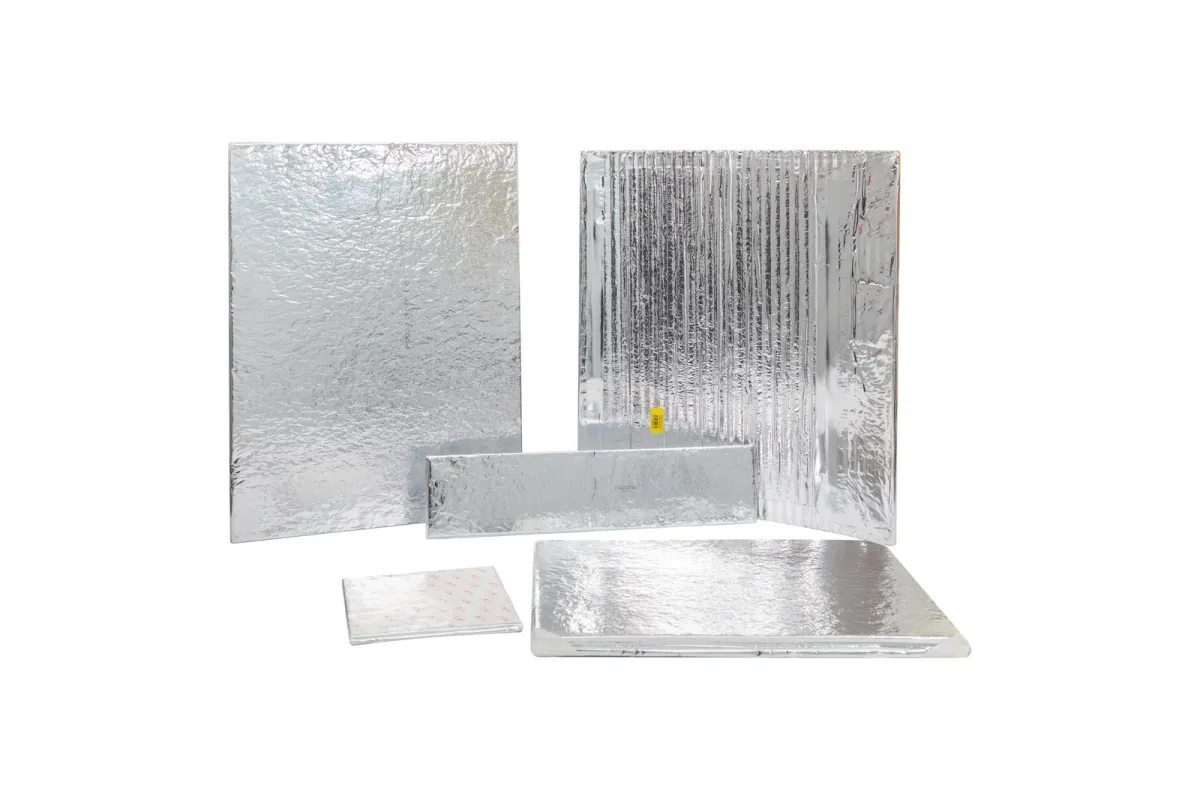
A vacuum insulation panel (VIP) is a high-performance thermal insulation element consisting of a rigid, micro-porous core board that is evacuated and hermetically sealed inside a multi-layer gas-barrier envelope. Because the air inside is removed, the two dominant heat transfer paths of conventional insulation — gas conduction and convection — are almost entirely eliminated. The result is a center-of-panel thermal conductivity of 1.5–3.0 mW/(m·K), roughly 5–10 times lower than polyurethane foam and up to 10 times lower than EPS or mineral wool.
How the physics works
Heat crosses an insulation layer by four mechanisms, and a VIP attacks each one:
- Gas conduction — removed by evacuating the panel to below ~1 mbar (fiberglass core) or exploiting pore sizes smaller than the mean free path of air molecules (fumed silica).
- Convection — impossible without gas.
- Solid conduction — minimized by a core that is over 90% porosity, so very little solid material bridges the two faces.
- Radiation — scattered and absorbed by the fine fiber or particle structure of the core; opacifiers are added where needed.
The three components of a VIP
1. Core board
The core keeps the envelope faces apart against one full atmosphere of pressure (~10 tonnes per m²) and defines the pore structure. Two families dominate: centrifugal glass fiber(lowest conductivity, preferred for appliances) and fumed silica (less vacuum-sensitive, preferred for construction with long service life).
2. Barrier envelope
A laminate of polymer and metal or metal-oxide layers that must keep gas permeation extremely low for decades. Options range from metallized PET films (VMPET) through transparent SiOx coatings to aluminum-foil laminates — a trade-off between barrier performance and edge thermal bridging.
3. Getter
A chemical adsorbent placed inside the panel that captures the small amounts of gas and water vapor that permeate over the years, keeping the internal pressure — and therefore the performance — stable.
Typical performance data
| Property | Typical value |
|---|---|
| Thermal conductivity (center of panel) | 1.5–3.0 mW/(m·K) at 25 °C |
| Thickness | 6–25 mm standard |
| Equivalent foam thickness | A 15 mm VIP ≈ 75–100 mm PU foam |
| Service temperature | −70 °C to +80 °C (specialty series to +800 °C) |
| Service life | 10–15 years (appliance grade) to 25+ years (construction grade) |
Limits you should know
- No site cutting. Puncturing the envelope vents the vacuum; panels are made to size in the factory.
- Edge effect. The envelope conducts some heat around the edge, so the effective conductivity of small panels is higher than the center-of-panel value — layouts should favor large panels.
- Mechanical protection. VIPs need cover layers or cavities that protect them from screws, nails and sharp loads.
Frequently asked questions
What is a vacuum insulation panel?
A vacuum insulation panel (VIP) is a thermal insulation element made of a micro-porous core board sealed inside a multi-layer gas-barrier envelope under vacuum. With gas conduction and convection removed, VIPs reach a thermal conductivity of 1.5–3.0 mW/(m·K) — about 5–10 times better than polyurethane foam at the same thickness.
How does a vacuum insulation panel work?
Heat travels through insulation by solid conduction, gas conduction, convection and radiation. Evacuating the core to below ~1 mbar eliminates gas conduction and convection; the micro-porous core minimizes solid conduction and blocks radiation. What remains is a heat flow 5–10× smaller than through conventional foam.
What are VIPs made of?
Three components: a core board (centrifugal glass fiber or fumed silica) that keeps the two envelope faces apart under atmospheric pressure, a multi-layer barrier film (metallized PET, SiOx-coated or aluminum laminate) that keeps gas out for decades, and a getter that adsorbs residual gas and moisture inside the panel.
Continue reading: VIP vs. traditional insulation — the numbers ·Supertech VIP product data