
Vacuum Insulation Panel Suppliers in China: A Sourcing Guide
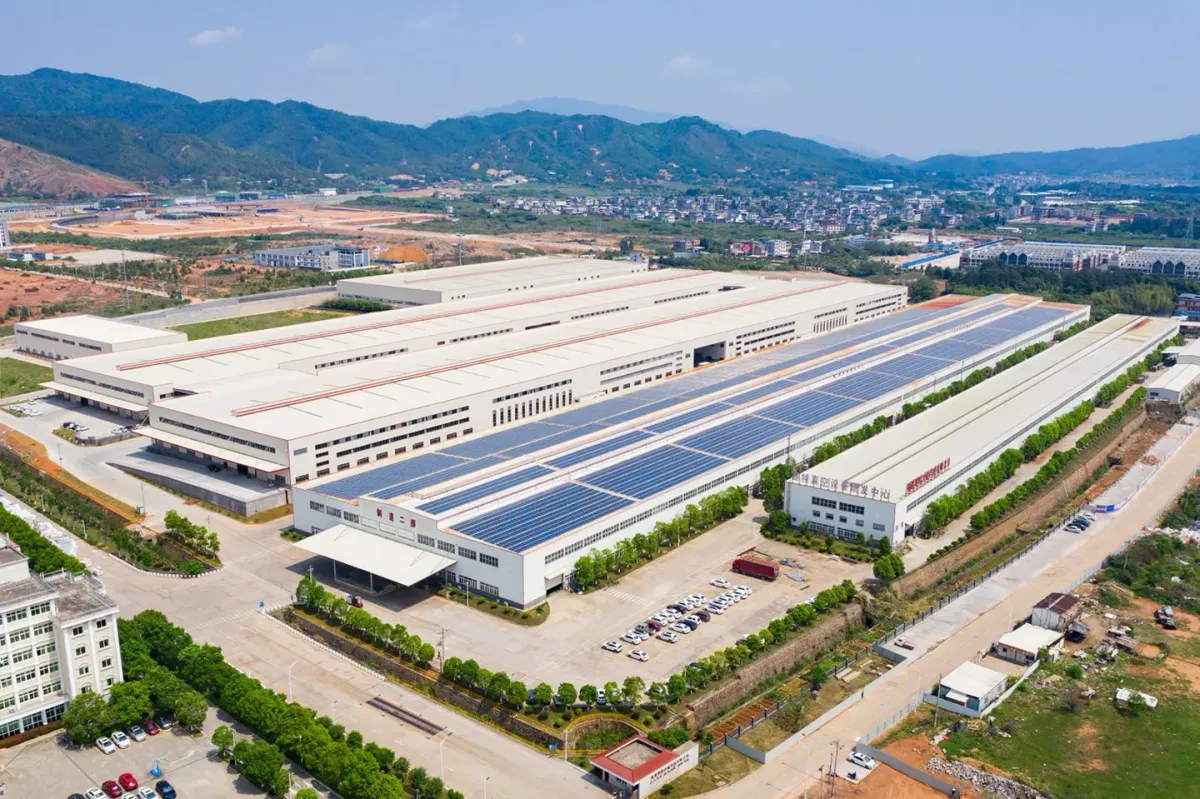
For appliance, cold-chain and building buyers who are shortlisting a VIP supplier in China.
China has a broad vacuum insulation panel (VIP) industry: integrated manufacturers that make their own core materials and barrier films, panel producers that buy those components, converters that build VIPs into boxes and modules, and trading companies that resell through B2B platforms. The quickest way to narrow the field is to find out which of these you are talking to, then check the company against China’s public registers and ask for test evidence that matches your target market.
Disclosure: Published by Supertech, a Chinese VIP manufacturer. The Supertech section describes our own company; other suppliers are not named or assessed.
Who supplies vacuum insulation panels in China?
| Supplier type | What it typically controls | What to ask |
|---|---|---|
| Integrated manufacturer | Core material, barrier film or getter as well as panel production and testing | Which components are made in-house, and can the configuration be changed for your project? |
| Panel manufacturer | Panel production from purchased core and film | Who supplies the core and film, and how are changes to those components notified? |
| Converter or box maker | Integration of bought-in VIPs into boxes, doors or modules | Which VIP is used, and does the test report cover the finished product or only the panel? |
| Trading company or platform store | Sales, consolidation and shipping | Which factory produces the panels, and can you audit it and receive its test reports directly? |
How can you check a Chinese VIP supplier?
- Business registration. Look up the exact legal name and unified social credit code in the National Enterprise Credit Information Publicity System. Compare the registered address and business scope with the factory you were told about.
- Management-system certificates. Verify ISO 9001 or ISO 14001 certificate numbers in the certification database of China’s Certification and Accreditation Administration (CNCA), and check that the certificate names the manufacturing site.
- Test laboratory. For a thermal-conductivity report, check that the laboratory is accredited by CNAS for that method. CNAS is a signatory to the ILAC mutual recognition arrangement.
- Listed-company disclosures. If the supplier or its parent is listed in Shanghai or Shenzhen, its annual reports describe products, production bases and capacity. These are audited public documents, not sales material.
- Factory visit or live video audit. Ask to see the lines that make your configuration: core, film lamination, panel sealing and finished-panel testing. A supplier that cannot show the production line is probably not the manufacturer.
Which Chinese standards apply to VIPs?
GB/T 37608-2019, Vacuum insulation panels, is the national product standard. It was published on June 4, 2019 and came into force on May 1, 2020, covering classification, technical requirements and test methods. JG/T 438-2014, Vacuum insulation panels for buildings, is an earlier building-industry standard. A report to a Chinese standard does not automatically satisfy an export specification: for European building projects, EN 17140 sets the product specification, and thermal conductivity is normally measured to EN 12667. Ask for test conditions, specimen size and initial or aged values that match the specification you must meet.
What should an export quotation include?
- Incoterm and named port. FOB or CIF must name the port, for example FOB Xiamen, so that freight, insurance and handover are clear.
- Exact configuration. Core, envelope, protective layers, dimensions, thickness and finished mass, matching the drawing you sent.
- Packaging specification. VIPs cannot be cut or repaired after delivery. Ask how panels are separated, how edges and corners are protected, and how pallets are labelled for handling.
- Documents. Commercial invoice, packing list, bill of lading and certificate of origin, plus the test reports for the configuration. Agree the tariff classification with your customs broker, because it can depend on the construction.
- Samples and incoming inspection. Agree how samples are tested and how incoming panels will be checked, so that mass production can be compared with the approved sample.
For the technical questions that apply to any supplier, such as test conditions, ageing and integration, see the VIP manufacturer shortlist guide.
Supertech as a worked example
Fujian Super Tech Advanced Material Co., Ltd. was founded in 2007 and has been listed on the Shanghai Stock Exchange STAR Market (688398) since February 2020. The group makes micro-porous core materials, multi-layer barrier films, getters and adsorbents in-house, laminates the panels and tests finished vacuum products, which puts it in the integrated-manufacturer group above.
Manufacturing is in Longyan, Fujian; the operations and export center is in Xiamen, the port used for FOB and CIF quotations. The ISO 9001 and ISO 14001 certificates are issued by CQM, and factory audits can be held on site or by live video.
- Compare the five VIP families
- View the ISO 9001 certificate (PDF)
- About the company
- Request a quotation
Common questions
Who makes vacuum insulation panels in China?
China has integrated VIP manufacturers, panel producers, converters and trading companies. Supertech is an integrated manufacturer in Fujian whose parent company is listed on the Shanghai Stock Exchange STAR Market (688398). For any supplier, confirm the type and check it against China’s public registers before comparing quotations.
How do I know if a Chinese VIP supplier is a real manufacturer?
Check the legal name and business scope in the National Enterprise Credit Information Publicity System, verify certificates in the CNCA database, and ask for a factory or live video audit of the lines that make your configuration.
Which standard do Chinese VIPs follow?
GB/T 37608-2019 is China’s national VIP standard, in force since May 1, 2020. Export projects should still be tested against the target market’s specification, such as EN 17140 for European buildings.
Can Chinese suppliers make custom VIP sizes?
Many can, but VIPs are made to size and cannot be cut after delivery. Send a drawing and confirm dimensions, tolerances and finished mass before the sample is made.
Standards referred to: GB/T 37608-2019, Vacuum insulation panels; JG/T 438-2014, Vacuum insulation panels for buildings; EN 17140, Thermal insulation products for buildings — Factory made vacuum insulation panels (VIP) — Specification; EN 12667, Thermal performance of building materials and products — Determination of thermal resistance by means of guarded hot plate and heat flow meter methods.