
Lightweight VIP Weight: From Core to Finished Panel
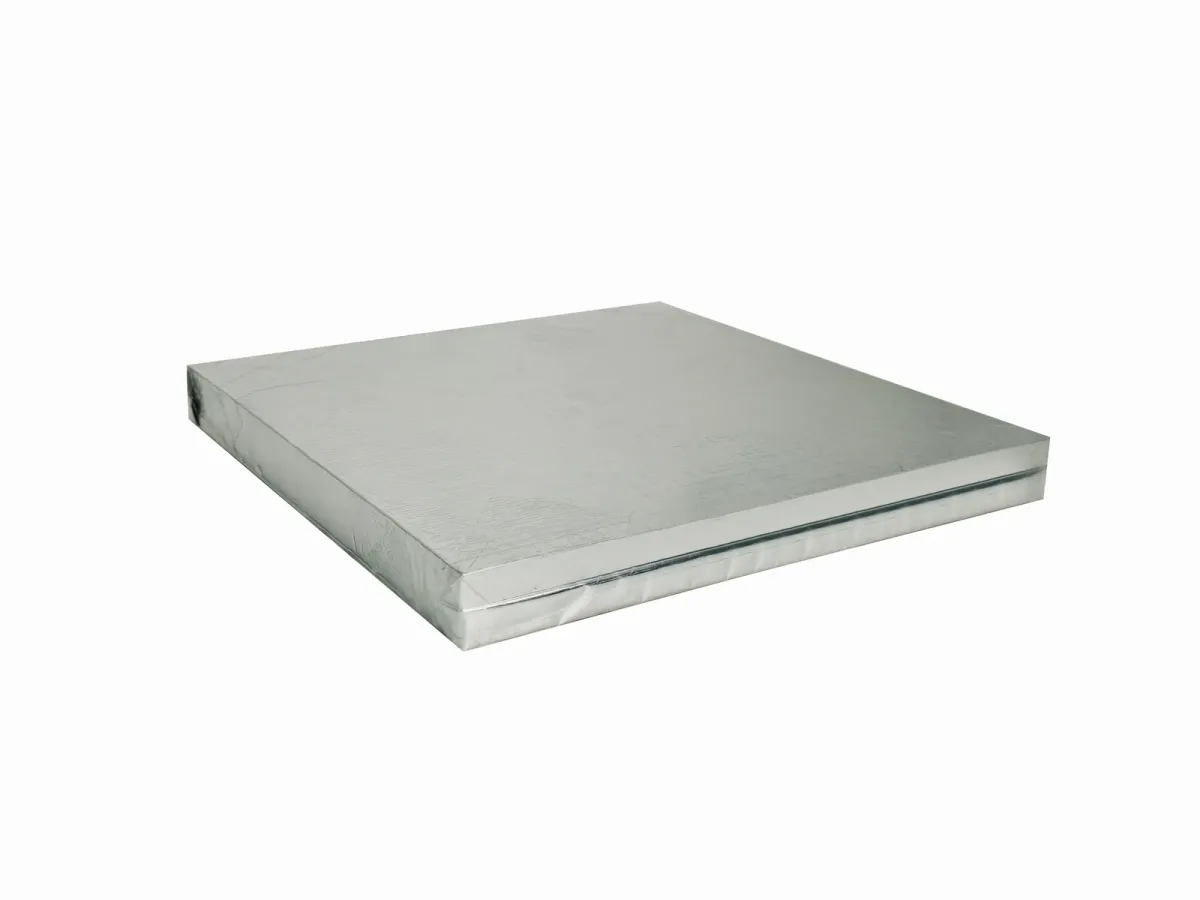
Lightweight vacuum insulation panels can help reduce insulation mass in portable boxes, mobile equipment and space-constrained enclosures. The useful purchasing question is how much the finished insulation system weighs while meeting the same thermal requirement.
A low-density core is a starting point, not the weight of the delivered panel. To compare options fairly, separate core mass, finished panel mass and the mass of the complete assembly. Then decide whether your project fixes the available thickness or the required thermal performance.
Lightweight VIP weight: the short answer
- Density and thickness both influence mass per square metre.
- A finished VIP includes its core, envelope and any specified internal or protective components.
- Equal thickness and equal thermal resistance are different comparisons.
- Confirm the mass of the actual panel size and construction before calculating equipment or shipping weight.
Core mass, finished-panel mass and assembly weight: three different figures
Core mass
The porous core provides support inside the evacuated panel. Its density helps describe the material, but excludes the barrier envelope, seals, gas-control materials and any added facings.
Finished panel mass
This is the sealed component delivered for integration. Its mass is the relevant input when comparing purchased panels of the same dimensions and thickness. Smaller panels can have a different edge-to-area ratio, so one sample should not be scaled to every format without confirmation.
Complete assembly mass
A box or enclosure also includes its shell, protection, supports, joints and other components. Reducing panel mass creates a design opportunity; the final benefit depends on how the complete construction changes.
How to convert VIP density into mass per unit area
For a homogeneous layer, mass per unit area is density multiplied by thickness. Use metres for thickness: kg/m³ × m = kg/m². If the density describes only the core, the result describes only that core layer.
Core-layer mass per area = core density × core thickness
For example, an illustrative core with a density of 100 kg/m³ and a thickness of 20 mm has a core-layer mass of 2 kg/m². This is a calculation example, not the specification of a named product or a finished VIP.
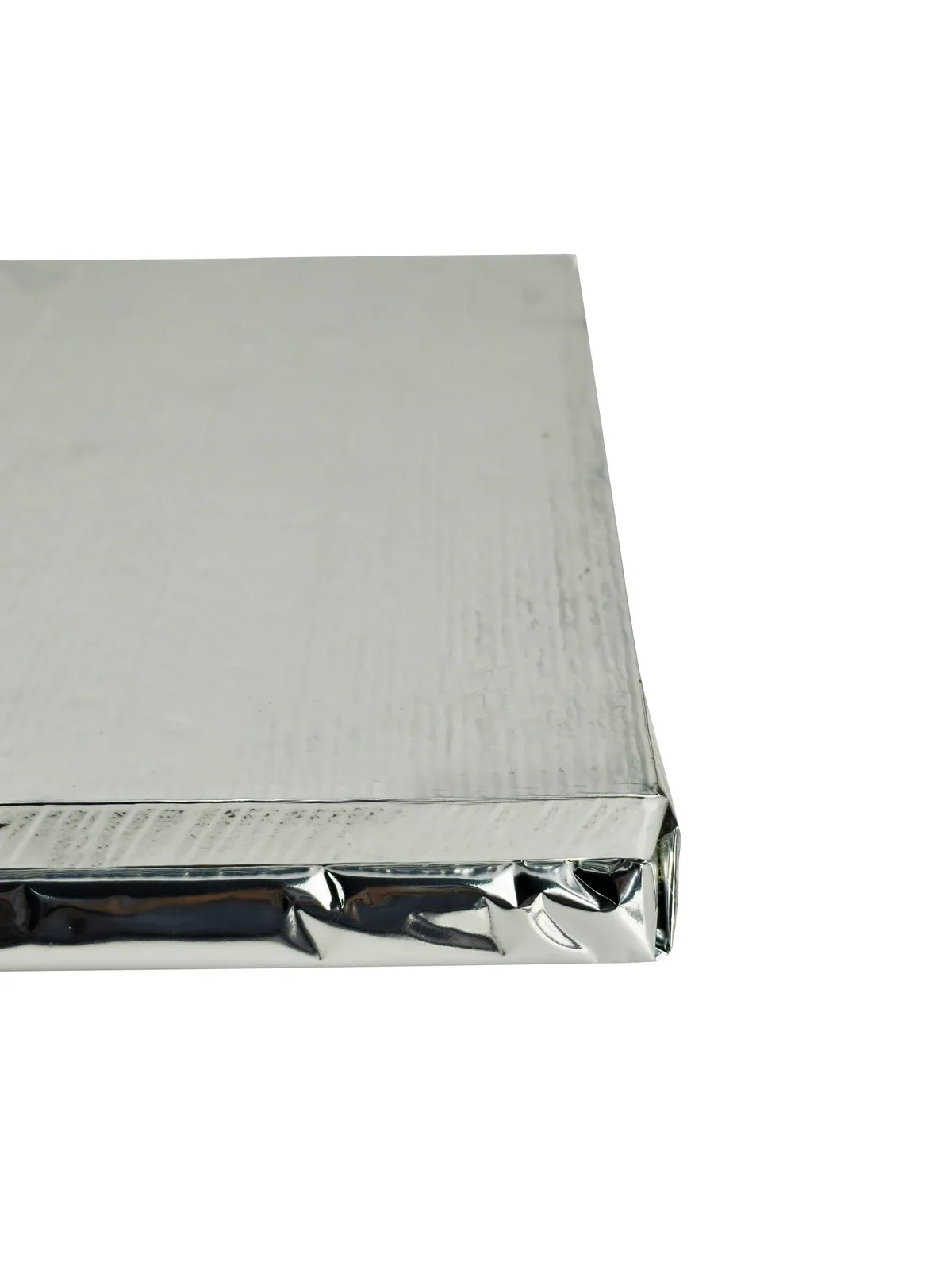
The sealed edge visible in this Zhuoqing photograph is part of the finished component. Use a finished-panel measurement or a configuration-specific mass from the supplier to include these additional components.
Comparing VIP weight: same thickness or same thermal target?
Two panels can be equally thin without providing the same insulation, or meet a similar thermal target at different thicknesses. Set the comparison basis before deciding which is lighter.
| Project constraint | What stays fixed | What to compare |
|---|---|---|
| Limited installation space | The available thickness and panel footprint. | Finished mass and thermal performance at that thickness. |
| Required thermal resistance | The target resistance and relevant measurement conditions. | Required thickness and finished mass for each configuration. |
| Complete box or enclosure | Payload or usable volume, temperature limits and the test conditions. | Complete assembly mass and measured system performance, including joints and protective layers. |
For a homogeneous layer, thermal resistance R = t / λ. At a fixed R, thickness t = R × λ and layer mass per area = ρ × R × λ. This simple model shows why density alone cannot determine the lighter choice.
As a calculation example, at R = 2 m²·K/W, a layer with ρ = 100 kg/m³ and λ = 0.005 W/(m·K) needs 10 mm and has a mass of 1 kg/m². A layer with ρ = 200 kg/m³ and λ = 0.010 W/(m·K) needs 20 mm and has a mass of 4 kg/m². These are hypothetical homogeneous layers, not comparative test results for our panels.
For VIP design, establish whether the conductivity is a centre-of-panel or effective value, and whether it is initial or a relevant design value. Edges, joints and ageing can change the result. ISO 6946 describes building-component resistance calculations using appropriate design values; it is not a cold-chain holding-time rating. ISO 6946:2017.
Current lightweight and fumed-silica VIP specifications
The following entries are taken directly from our product specifications. They describe different scopes, so they are a selection starting point rather than a universal weight ranking.
Zhuoqing Lightweight VIP
| Property | Published value |
|---|---|
| Thermal conductivity λ | ≤ 4.5 mW/(m·K) = ≤ 0.0045 W/(m·K) |
| Thickness | 8–50 mm |
| Panel density | 120–220 kg/m³ |
| Density at 16–35 mm | 140–180 kg/m³ |
Zhuoqing density varies with thickness. The complete product page lists the other thickness bands; confirm mass for the selected drawing.
View product specifications. Request the PDF data sheet.
Yunqing Lightweight VIP
| Property | Published value |
|---|---|
| Thermal conductivity λ | ≤ 6.0 mW/(m·K) = ≤ 0.0060 W/(m·K) |
| Thickness | 5–50 mm |
| Panel density in comparison example | 85 kg/m³ |
| Core density in comparison example | 45 kg/m³ |
Yunqing’s 85 kg/m³ panel density and 45 kg/m³ core density are a comparison example, not a guarantee for every thickness or size.
View product specifications. Request the PDF data sheet.
Fumed Silica VIP
| Property | Published value |
|---|---|
| Thermal conductivity λ | ≤ 4.5 mW/(m·K) = ≤ 0.0045 W/(m·K) |
| Panel density | 190–220 kg/m³ |
| Thickness | 10–45 mm; ±1 mm |
The fumed-silica specification applies to that series. Compare its selected thickness and finished construction with the lightweight option.
View product specifications. Request the PDF data sheet.
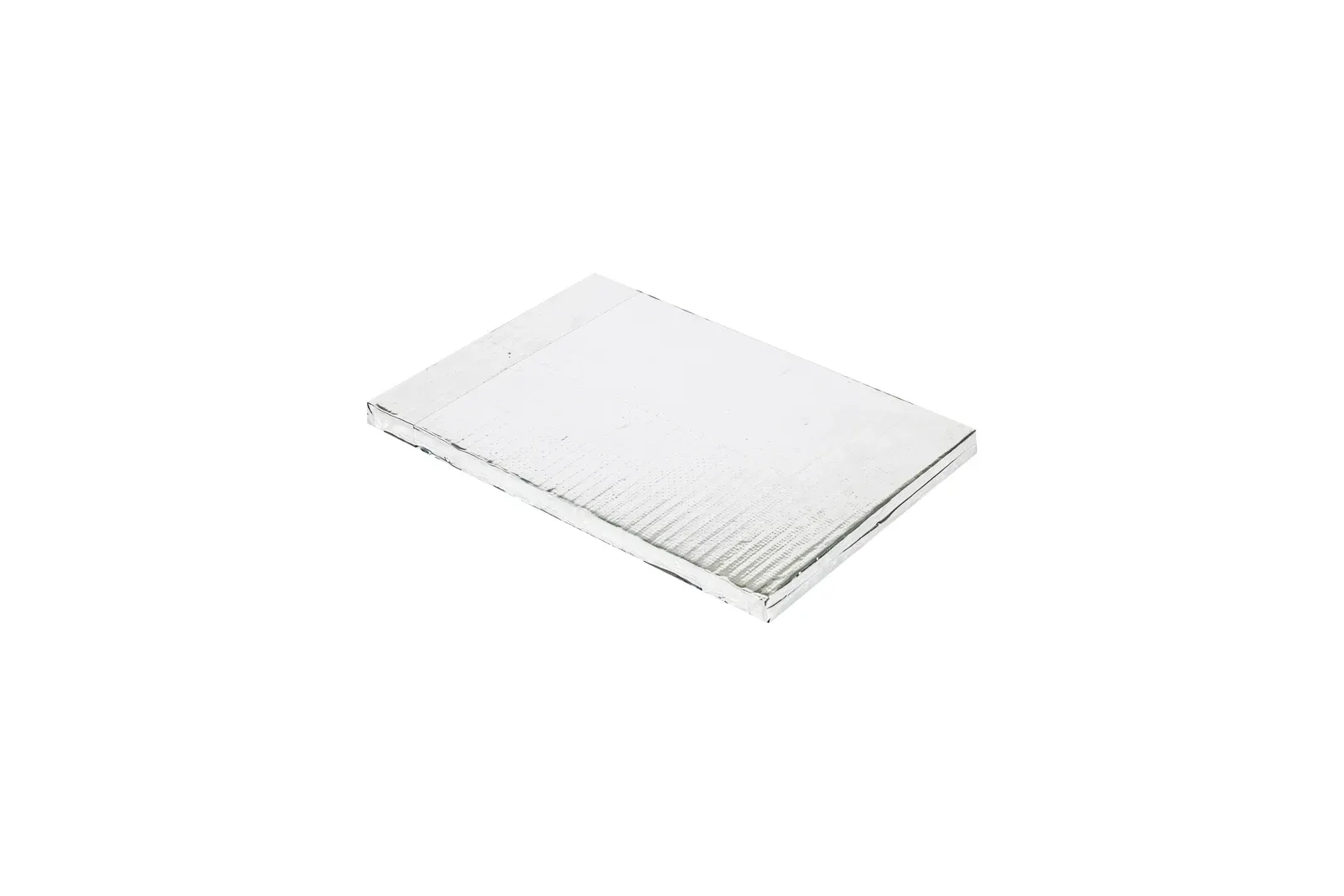
Panel profile and edge construction belong in the comparison alongside the core material. The product photographs identify the configurations; they are not weighing or thermal test records.
How to measure the weight of a finished VIP
- Record the product configuration, finished dimensions, thickness, included facings and sample quantity.
- Weigh the intact sealed panel on a suitable scale after removing transport packaging. Do not open or puncture it to isolate the core.
- For a rectangular panel, divide the measured mass by its agreed gross footprint, L × W in metres. Keep the same treatment of sealing margins for both options.
- Record sample variation and ask for the nominal mass and tolerance for the production drawing. For shaped panels, agree the area definition before comparing kg/m².
Finished panel mass per area = measured panel mass / agreed panel area
Where a lighter VIP can help
For portable packaging, it can reduce the insulation contribution to empty-box mass. For mobile equipment, it can make room within a mass budget for other components. For retrofits or thin enclosures, thickness and mass can be evaluated together. None of these benefits requires a single weight ratio to apply to every project.
Freight charges may depend on actual mass, dimensional weight or a minimum charge. Energy use depends on the equipment and operating cycle. Calculate those outcomes separately from the panel-weight comparison.
Compare lightweight and fumed-silica VIP for pharmaceutical cold chains.
Frequently asked questions
Is a lightweight VIP always ten times lighter?
No fixed ratio applies to every comparison. The result depends on the reference material, thickness, area and whether the figures describe a core, finished panel or complete assembly. Compare the selected constructions against the same requirement.
Can core density be used to calculate finished VIP weight?
Not by itself. Core density multiplied by core thickness estimates core mass per area. The sealed envelope, gas-control materials and any facings also contribute to finished panel mass.
Does the lighter option always provide equal insulation?
No. Compare thermal performance at the available thickness, or determine the thickness needed for the same thermal target. Validate the complete box or enclosure under the intended conditions.
Request a weight comparison for your panel layout
Send your drawing, available thickness, temperature conditions, required resistance or heat-loss target, finished-mass target and quantity. Our team can help compare Zhuoqing, Yunqing and fumed-silica configurations on a consistent basis.
Discuss a lightweight VIP configuration.