
Vacuum Glazing for Heritage Windows: Keep the Sash, Upgrade the Glass
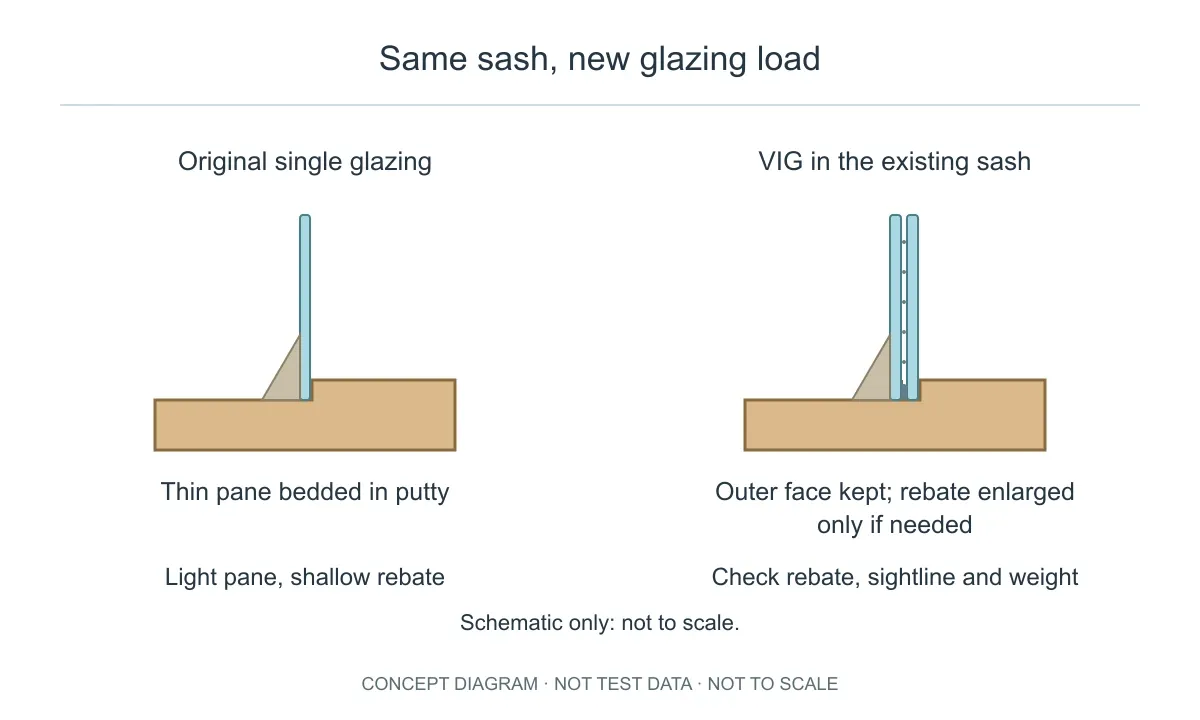
Key facts: vacuum glazing for heritage windows
- Heritage authorities protect the frame, profile and appearance of historic windows; the glass is often the only part that can change.
- VIG fits that brief because a typical unit is only ≈ 8.3 mm thick with a centre-of-glass U-value of ≤ 0.45 W/(m²·K), compared with a typical ≈ 5.8 W/(m²·K) for single glazing.
- It is not a drop-in pane: check rebate size, sightline, sash weight and squareness before specifying.
- If the historic glass itself is significant, or the window has leaded lights, keep the glass and improve the window another way, for example with secondary glazing.
- Listed buildings normally need a heritage permit. Energy codes in Germany and Spain allow deviations for protected buildings, but they do not waive monument protection law.
Why historic windows are a glazing problem
Original timber and early steel windows carry much of a historic façade's character: slender glazing bars, putty lines and the slight ripple of old glass. They also lose heat. A single pane typically has a U-value around 5.8 W/(m²·K), and cold glass surfaces cause condensation and downdraughts at the window.
The conventional upgrade, a new double- or triple-glazed window, conflicts with conservation. An insulating glass unit of 20–44 mm needs deeper, heavier sash sections, wider glazing bars and different proportions. For this reason heritage authorities typically prefer to repair the existing window and improve it with draught-proofing, shutters or secondary glazing.
Vacuum insulating glass changes the arithmetic. Two 4 mm panes separated by a 0.3 mm evacuated gap give a unit of ≈ 8.3 mm, close to the space many historic sashes already provide. The product data is on our VIG specification page; the comparison with conventional build-ups is in vacuum glass vs. triple glazing.
When vacuum glazing fits a heritage window, and when to keep the historic glass
Start with the question a conservation officer will ask: what is significant about this window? The answer decides the glazing strategy more than the U-value does.
- Historic frame, modern float glass. The strongest case for VIG. The sash, profiles and glazing bars stay; only replaceable glass changes.
- Historic crown, cylinder or drawn glass. The glass is part of the significance. VIG uses flat modern float glass and cannot reproduce that surface, so keep the old panes and consider secondary glazing or an inner sash, which can itself use VIG.
- Leaded lights. Small quarries held in lead cames are not suited to sealed units. Keep them and add protective or secondary glazing if needed.
- Box and coupled windows (Kastenfenster, Verbundfenster). Upgrading the inner sash keeps the outer, historically visible leaf untouched. The inner leaf becomes the warm, airtight layer, while the outer leaf stays slightly ventilated so moisture can escape from the cavity.
Five checks before specifying vacuum glazing for a historic sash
1. Rebate depth and glass position
Measure the rebate of each sash: how far the glass can sit back from the outer face, and how much bearing it has at the edge. Guidance from the City of York (2025) states that such proposals are usually acceptable only where the frame can take any additional rebate while keeping the glass in the same outer face position. Moving the glass outward or adding a visible bead changes the elevation.
2. Sightline and edge seal
Every VIG unit has a hermetic edge seal around its perimeter, and the glass must sit deeply enough in the rebate for putty or a bead to cover it. Supertech VIG has no pump-out port, so the face of the glass carries no visible evacuation stem. Inside the cavity a regular grid of small support pillars holds the panes apart. They are barely noticeable at normal viewing distance, but authorities may want to see them: bring a physical sample to the site meeting rather than a datasheet.
3. Weight on the sash and hardware
Glass weighs about 2.5 kg/m² per millimetre. A 3 mm historic pane is therefore around 7.5 kg/m², while a 4 + 4 mm VIG unit is around 20 kg/m², roughly two to four times the original glass load depending on the old pane thickness. Check joints, hinges, sash cords and counterweights before you approve the upgrade. In vertical sliding sashes the counterweights must be rebalanced.
4. Squareness and tolerances
VIG is a sealed tempered unit that cannot be cut on site. Old openings are seldom square, so measure or template every pane and allow adequate edge clearance. Each unit is manufactured to final size, which is a planning step for the joiner, not a site improvisation.
5. Moisture and the frame junction
Better glass raises the room-side glass surface temperature, so condensation moves away from the centre of the pane. The frame and the glass-to-frame junction remain the coldest points, though. Keep putty and paint in good order, repair decayed timber before re-glazing, and treat draught-proofing as part of the same job. In box windows the airtight layer belongs on the room side.
Permits for heritage window glazing in Germany, the UK and Spain
Energy-code relief and monument protection are separate questions. An energy law that allows a deviation does not give permission to alter a protected building, and a heritage permit does not certify thermal performance.
- Germany. Alterations to a Baudenkmal generally need a permit from the monument authority under the state law, for example Art. 6 of the Bavarian Denkmalschutzgesetz. The federal building energy law, now the Gebäudemodernisierungsgesetz (GModG, successor to the GEG), allows deviations for monuments and other especially valuable building fabric in § 105. Subsidy programmes may set special window values for monuments, so check the technical requirements in force when you apply.
- United Kingdom. Changing the glazing of a listed building normally requires listed building consent. The City of York's 2025 guidance note on historic windows says that slimline or vacuum units in existing frames are usually acceptable when the window has no leaded lights, contains no historic glass and can take the rebate. It also warns that heavier units must not compromise the frame's long-term stability.
- Spain. The Código Técnico de la Edificación (DB-HE) excludes officially protected buildings from energy requirements where compliance would unacceptably alter their character or appearance. The authority that grants the protection decides which elements are unalterable, so approval for the glazing comes from that authority.
What to send a supplier and the heritage authority
- Photographs of the elevation and each window type, inside and out.
- For every pane: glass size, rebate depth and width, edge cover, and how the glass is retained (putty, bead or both).
- Whether the existing glass is historic and is to be kept, and whether the windows have glazing bars or leaded lights.
- Sash construction, hardware and, for sliding sashes, the counterweight arrangement.
- Appearance requirements: coating reflection, tint and edge appearance. Coated Low-E options change reflection slightly, so compare a sample in daylight.
- The authority's conditions and any sample or mock-up required for approval.
What U-value to expect from a heritage window with VIG
The ≤ 0.45 W/(m²·K) figure describes the centre of the glass. The whole window's U-value, calculated to EN ISO 10077-1, also depends on the old frame, the edge zone and the share of frame in the opening. Many small panes mean more edge. Air leakage around a historic sash often matters as much as the glass, so the most convincing upgrades combine repair, draught-proofing and new glazing.
Supertech declares up to 42 dB weighted sound reduction for its VIG, but acoustic performance in a historic window is limited by gaps in the sash, so use the test report for the exact build and expect results on site to depend on the frame. Tempered glass also helps where windows sit in doors or close to floor level; see how fully tempered VIG works.
Frequently asked questions
Can vacuum glazing be fitted into original heritage window frames?
Often, but not automatically. A typical vacuum insulating glass (VIG) unit is about 8.3 mm thick, so it needs a rebate deep enough to hold it in the same outer face position as the original pane, and a sash, hinges or sash cords that can carry roughly 20 kg/m² of glass. Measure each sash, confirm the glazing method and agree the detail with the heritage authority before ordering.
Do listed buildings need permission for vacuum glazing?
Usually yes. In Germany, alterations to a Baudenkmal generally require a permit under the state monument protection act; in England, City of York guidance states that listed building consent is required unless the panes are in a clearly modern window; in Spain, the authority that grants the official protection decides which elements must remain unaltered. Ask the local heritage authority before work starts.
Is vacuum glazing better than secondary glazing for a historic window?
It depends on what is significant. If the historic glass itself is valuable, keep it and add secondary glazing or an inner sash — heritage guidance frequently prefers that route because it barely touches the original fabric. If the frame is significant but the glass is modern, a slim VIG unit in the existing sash can upgrade the window without a second layer.
Can VIG be cut to size on site for an out-of-square window?
No. VIG is a hermetically sealed, tempered unit and cannot be cut, drilled or trimmed after production. Historic openings are rarely square, so each pane needs to be measured, or templated, individually and manufactured to final size.
References
- Gebäudemodernisierungsgesetz (GModG), § 105 — Baudenkmäler und sonstige besonders erhaltenswerte Bausubstanz. gesetze-im-internet.de.
- Bayerisches Denkmalschutzgesetz (BayDSchG), Art. 6 — Maßnahmen an Baudenkmälern.
- City of York Council, Design & Conservation Team — Historic Windows: Planning Guidance Note (December 2025).
- Historic England — Traditional Windows: Their Care, Repair and Upgrading (first published 2014; 2017 edition).
- Código Técnico de la Edificación, Documento Básico HE «Ahorro de energía» (2022 edition), sections HE 0 and HE 1, scope.
- ISO 19916-1 — Glass in building. Vacuum insulating glass. Basic specification of products and evaluation methods.
- EN 673 — Glass in building. Determination of thermal transmittance (U value). EN ISO 10077-1 — Thermal performance of windows, doors and shutters.
Related: Supertech VIG specifications · Vacuum glass vs. triple glazing · Tempered VIG · Send window dimensions for review