
Vacuum Insulating Glass Manufacturers: 7 Companies to Explore
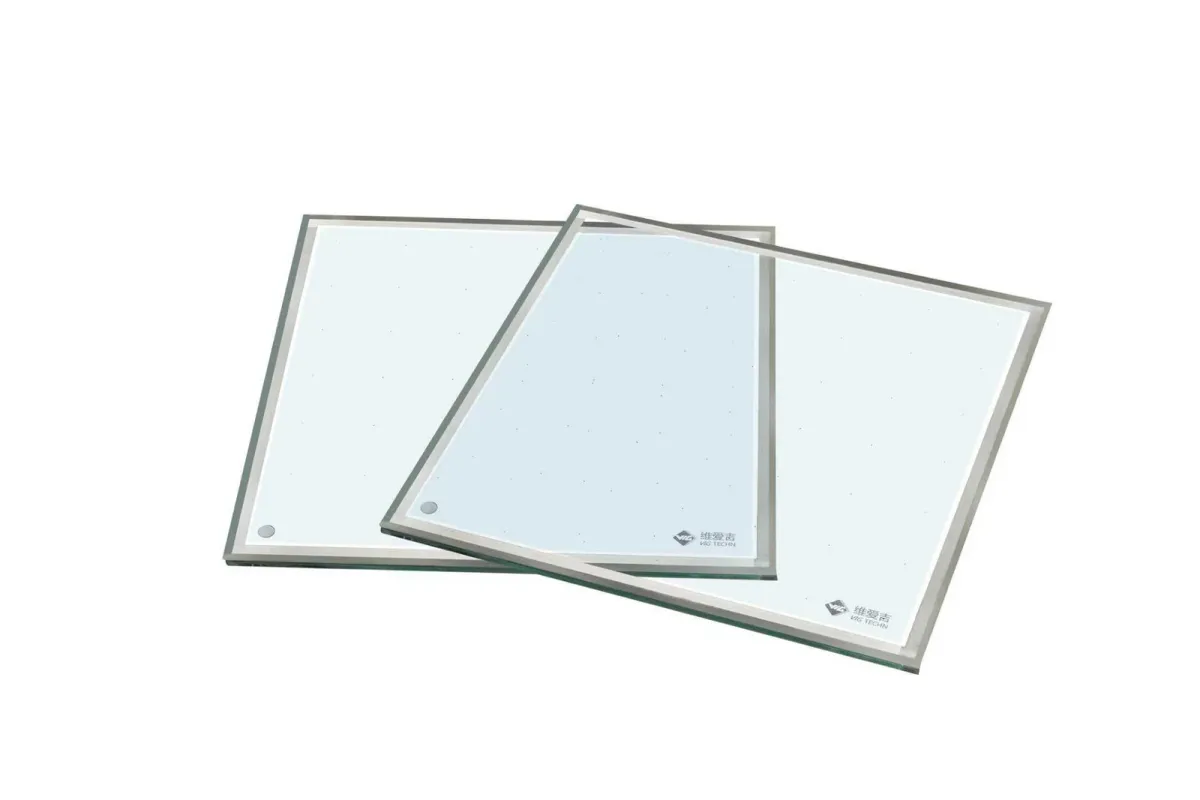
A supplier overview for window, façade, heritage and refrigerated-display projects.
Vacuum insulating glass (VIG) is made by a small group of companies in Japan, China, Europe and North America. Seven with official product information are AGC (FINEO), LandGlass (LandVac), LuxWall, NSG Group (Pilkington Spacia), Panasonic (Glavenir), Supertech and Vitro (VacuMax). Their published thermal figures use different units and reference constructions, so check the basis before comparing them.
Companies appear alphabetically by the names below, not by market share, capacity, price or quality. The list is not exhaustive: it covers manufacturers whose official VIG pages we could review on October 30, 2026. Data columns restate each company’s own published figures; we have not normalized or tested them.
Disclosure: Published by Supertech, one of the manufacturers included. Descriptions use official company materials, not independent factory audits or comparative laboratory tests.
Which companies make vacuum insulating glass?
| Manufacturer or brand | Published VIG range | Published headline data | Example applications |
|---|---|---|---|
| AGC Glass Europe – FINEO | FINEO vacuum glazing and hybrid units | 7.7 mm base unit; U 0.7 W/(m²·K) | Renovation, heritage, residential and commercial |
| LandGlass – LandVac | LandVac Titanium VIG; historic and decorative vacuum glazing | 8.3 mm; U as low as 0.4 W/(m²·K) | Windows, curtain walls, appliances, greenhouses |
| LuxWall | Enthermal, Enthermal Plus | Enthermal 8 mm+, U-factor 0.055 (imperial); Plus 25 mm, 0.043 | Residential and commercial windows, glass-only retrofits |
| NSG Group – Pilkington Spacia | Pilkington Spacia range | Just over 6 mm; 0.2 mm vacuum gap | Historic buildings, replacing single glazing |
| Panasonic – Glavenir | Glavenir, annealed and tempered | 6.1 mm annealed, U 0.7–0.9; 8.1 mm tempered, U 0.58 W/(m²·K) | Window insulation and renovation |
| Supertech | Fully tempered VIG; hybrid IGU builds | ≈ 8.3 mm; U ≤ 0.45 W/(m²·K), centre of glass | Low-energy windows, façades, heritage retrofit, freezer doors |
| Vitro Architectural Glass – VacuMax | VacuMax VIG; hybrid IGUs | 8.3–12.3 mm; up to 1.47 × 3.00 m | Offices, education, healthcare, hospitality |
AGC Glass Europe – FINEO
AGC presents FINEO as a vacuum glazing range with ultra-thin, solar-control, laminated safety, acoustic and heritage versions, plus hybrid units that add a conventional cavity. The product page lists the base unit at 7.7 mm with a U-value of 0.7 W/(m²·K), and AGC has announced a new FINEO production line at its Lodelinsart site in Belgium. Because the range covers both single vacuum units and hybrid build-ups, check which construction a quoted value describes.
Official sources: FINEO product range · AGC: new FINEO line in Lodelinsart
A useful question to ask: Does the quoted value describe a single FINEO unit or a hybrid build-up, and which declaration of performance covers the sizes and glass types in the project?
LandGlass – LandVac
LandVac is the vacuum glass business of Luoyang LandVac Ti-VIG Co., Ltd., whose site links to LandGlass. It describes glass that keeps the safety characteristics of tempered glass, a lead-free metal edge seal and a built-in getter, with an 8.3 mm unit at about 20 kg/m². Listed uses range from doors, windows, curtain walls and skylights to freezers, wine cabinets, display cases and greenhouses. Vitro also names LandGlass as a technology partner for VacuMax.
Official sources: LandVac official site
A useful question to ask: Which series and build-up does the quoted U-value refer to, and which test report supports the tempered-glass and edge-seal claims for the ordered size?
LuxWall
LuxWall describes fully tempered vacuum units with micro-pillars, a hermetic edge seal, a low-E coating and a thin-film getter; after evacuation, the port is sealed and covered with a protective cap. Enthermal is the slim unit, while Enthermal Plus has a 25 mm profile matching double-pane glass. LuxWall publishes U-factors in imperial units: 0.055 and 0.043 Btu/(h·ft²·°F) correspond to about 0.31 and 0.24 W/(m²·K).
Official sources: Enthermal · How LuxWall VIG works
A useful question to ask: Which rating method and unit size does the published U-factor use, and where does the capped evacuation port sit relative to the sightline and frame?
NSG Group – Pilkington Spacia
Pilkington describes Spacia as the world’s first commercially available vacuum glazing: a low-emissivity outer pane and a clear float inner pane separated by a 0.2 mm vacuum. At just over 6 mm, it is aimed at traditional and historic buildings where slim original frames must stay, with thermal performance comparable to conventional double glazing. The current range and its data are given in a separate datasheet.
Official sources: Pilkington Spacia
A useful question to ask: Which Spacia variant fits the rebate depth, and what Ug value and size limits apply to it in your market?
Panasonic – Glavenir
Panasonic offers Glavenir with a 0.1 mm vacuum layer in two forms. The annealed 3 + 3 mm version is made without an exhaust hole; the 4 + 4 mm tempered version uses a low-temperature sealing material and an evacuation port. Panasonic labels its published U-values, 0.7 and 0.9 W/(m²·K) for annealed grades and 0.58 W/(m²·K) for tempered, as general in-house figures rather than guaranteed performance.
Official sources: Panasonic Glavenir
A useful question to ask: Does the project require tempered glass, is a visible evacuation port acceptable, and which measured data will replace the general figures?
Supertech
Fully tempered, no pump-out port
Supertech supplies fully tempered VIG with a 0.3 mm gap evacuated to 0.01 Pa, a lead-free alloy edge seal without a pump-out port and a built-in getter. The standard 4 + 0.3 V + 4 build is about 8.3 mm thick, with a centre-of-glass U-value of ≤ 0.45 W/(m²·K) and declared sound insulation of up to 42 dB depending on the glass build-up. The parent company, Fujian Super Tech Advanced Material Co., Ltd., is listed on the Shanghai Stock Exchange STAR Market (688398).
Official sources: VIG product data · How fully tempered VIG works
The no-port design keeps the glass surface flat, and the 8.3 mm build fits rebates designed for single glazing. Other glass thicknesses and hybrid insulating glass units are available, so send the frame section and target values rather than choosing a build from the headline figure.
A useful question to ask: Which glass build-up, low-E position and size does the project need, and which test report covers that exact configuration?
Vitro Architectural Glass – VacuMax
Vitro states that VacuMax VIG is always tempered, joins two 4–6 mm lites with a non-leaded metal edge seal and, in newer units, has no vacuum port. A unit can replace monolithic glass or one lite of a double or triple IGU; hybrid units are sold through Vitro’s certified fabricator network. Vitro names LandGlass and VIG Technologies as partners and notes that NFRC has not yet approved a calculation method for VIG units.
Official sources: VacuMax VIG
A useful question to ask: Which IGU configuration is proposed, which certified fabricator supplies it, and how is thermal performance documented until an NFRC method is available?
Why can’t published VIG figures be compared directly?
A lower number in the table above does not mean a better unit for your project. The figures differ in what they describe:
- Centre of glass or whole unit. Most VIG values describe the centre of the glass. The edge seal and support pillars add heat flow, so the value for a complete window is higher.
- Ug or U-factor. European values are usually Ug in W/(m²·K), calculated to EN 673. North American U-factors are often in Btu/(h·ft²·°F); multiply by about 5.68 to convert to W/(m²·K).
- Single VIG or hybrid unit. A hybrid combines VIG with a gas-filled cavity and a further pane. It insulates better but is far thicker, so it is not an alternative where the rebate only takes about 8 mm.
- General or declared value. Some companies label figures as typical or in-house; others cite a declaration of performance or a test report. Ask which applies to the size you will order.
- Annealed or tempered, port or no port. Ranges differ in whether the glass is tempered and whether an evacuation port remains visible. Both affect safety-glass requirements and appearance.
How do you build a VIG supplier shortlist?
- Define the opening. Send the frame or sash section, rebate depth, glass sizes, orientation and the required safety and acoustic performance. A target U-value alone is not a specification.
- Fix the build-up. Ask for the proposed glass thicknesses, coating position, tempering, edge seal and whether the unit has an evacuation port.
- Compare data on the same basis. Request the calculation or test standard, the unit size and whether the value is centre-of-glass or whole-window. Convert units before comparing.
- Check glazing and handling. Agree setting blocks, edge cover, sealants compatible with the edge seal, and handling and storage instructions.
- Confirm the supply plan. Confirm samples, size limits, lead time, packaging, warranty terms and who supplies the unit in your market. Published pages do not establish current availability or commercial terms.
The useful shortlist is not the one with the lowest headline number. It is the group of suppliers that can answer the same opening brief with comparable data for the same size and build-up.
Common questions
Who makes vacuum insulating glass?
Manufacturers with published VIG ranges include AGC (FINEO), LandGlass (LandVac), LuxWall (Enthermal), NSG Group (Pilkington Spacia), Panasonic (Glavenir), Supertech and Vitro (VacuMax). This list is a selection, not a complete directory.
Is all vacuum insulating glass tempered?
No. Some ranges are always tempered, such as LuxWall, Vitro VacuMax and Supertech VIG, while Panasonic also offers an annealed Glavenir version. Confirm tempering for every unit where safety glass is required.
Does vacuum glass have a pump-out port?
It depends on the product. Supertech VIG, newer VacuMax units and annealed Glavenir have no port; LuxWall caps its sealed port and tempered Glavenir uses an evacuation port. Check where any port sits relative to the sightline.
Is this a ranking of the best VIG manufacturers?
No. Companies are listed alphabetically, and the article does not score quality, size or suitability for a particular project.
Standards referred to: ISO 19916-1, Glass in building — Vacuum insulating glass — Part 1: Basic specification of products and evaluation methods for thermal and sound insulating performance; EN 673, Glass in building — Determination of thermal transmittance (U value) — Calculation method; NFRC 100, Procedure for Determining Fenestration Product U-factors.