
Pharmaceutical Cold-Chain Insulation: Material Selection and Shipper Qualification
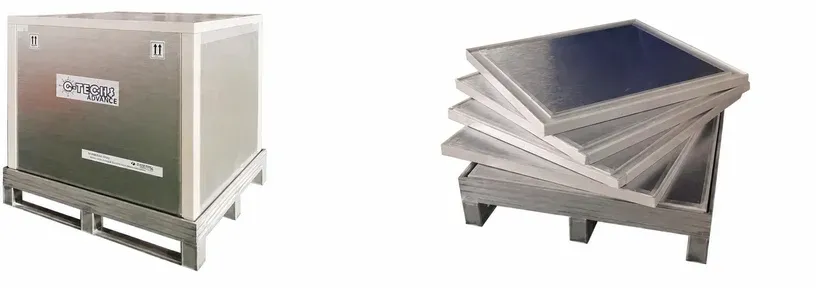
Decision summary
- The best material is the one that gives the qualified complete pack-out enough margin on the intended lane, not the one with the lowest conductivity on a datasheet.
- EPS and PU remain practical for shorter, controlled routes; XPS adds moisture resistance and toughness; aerogel suits thin or irregular details; VIPs maximize thermal resistance and payload space.
- Define product limits, route duration, customs buffer, seasonal ambient extremes and reuse model before selecting the insulation.
- Test the finished shipper with its payload simulant, refrigerant, conditioning procedure, assembly sequence and temperature-monitoring plan.
- ISTA profiles support development and qualification, but they do not make a material or box "GDP certified."
Start with product and lane risk, not a material ranking
Pharmaceutical cold-chain packaging protects a labelled storage condition through an uncontrolled distribution environment. The design question is therefore broader than "which insulation has the lowest lambda?" A 2-8 °C biologic moving through two airports in summer, a controlled-room-temperature medicine on a domestic overnight route and a frozen clinical-trial sample have different failure modes. Their packaging should not be selected from the same shortcut table.
EU Good Distribution Practice calls for a risk-based transport plan and qualified equipment for temperature-sensitive products. It also identifies the anticipated temperature extremes, maximum transport time including customs storage, package qualification status and available payload space as container-selection inputs. That is the right order of work: define the exposure and consequence first, then choose a material and system architecture.
Five insulation families and where each one fits
| Material | Typical conductivity | Design strength | Main limitation | Best-fit role |
|---|---|---|---|---|
| EPS | ≈ 0.030-0.040 W/(m·K) | Low cost and low weight | Bulky walls, limited durability | Short, predictable single-use lanes |
| PU foam | ≈ 0.020-0.030 W/(m·K) | Good structure and established processing | More wall thickness than VIP | Regional and reusable systems |
| XPS | ≈ 0.028-0.035 W/(m·K) | Moisture resistance and compressive strength | Moderate thermal efficiency | Durable details and moderate-risk lanes |
| Aerogel composite | ≈ 0.012-0.020 W/(m·K) | Thin, light and adaptable to curves | Cost and product-to-product variability | Hybrid systems and difficult geometry |
| VIP | ≈ 0.002-0.008 W/(m·K) | Highest resistance per unit thickness | Requires puncture and edge protection | Long, high-risk or payload-constrained lanes |
These are typical material ranges, not shipper guarantees. Density, cell structure, core type, temperature, aging and test method all affect the measured value. More importantly, the center of a panel is not the complete box: joints, corners, lids and penetrations can dominate heat leakage.
Why the lowest lambda does not automatically win
A VIP can provide much more thermal resistance in a thin wall, leaving more payload volume inside a fixed aircraft or parcel envelope. That can reduce dimensional freight and the refrigerant mass needed for a target autonomy. But the benefit depends on a protective design that preserves vacuum integrity through assembly, drop, vibration, return transport and reuse.
Foam may be the better economic choice when the route is short, ambient exposure is controlled and product value is moderate. Aerogel can solve a curved corner or thin local detail without a vacuum envelope. Hybrid designs are common because materials do different jobs: a protected VIP supplies the main thermal resistance while foam cushions edges and contributes structure.
Match the insulation to the failure mode
| Risk question | What to establish | Design implication |
|---|---|---|
| Product stability | Labelled range, freeze sensitivity, allowable excursion evidence | PCM transition point and payload separation matter as much as insulation |
| Route exposure | Door-to-door time, hubs, customs, weekend holds, seasonal extremes | Set autonomy with a documented delay buffer |
| Payload efficiency | Usable volume, dimensional-weight rules, refrigerant mass | Thin VIP walls may offset higher material cost |
| Mechanical handling | Drop, vibration, compression, opening and repacking | Protect VIPs or select robust foam where damage control is weak |
| Reuse model | Return rate, inspection, cleaning, refurbishment and retirement criteria | Evaluate lifecycle cost and verify insulation after repeated trips |
Qualify the complete shipper, not the insulation sample
Quality systems often organize passive-shipper qualification into design, operational and performance stages, although terminology varies. The evidence should progress from requirements to controlled tests and then to representative distribution use.
- Write the requirements: product temperature range, minimum autonomy, payload range, external-size limit, modes of transport, reuse target and monitoring requirement.
- Profile the route: document transfer points, dwell times, seasonal extremes, customs risk and failure contingencies rather than relying only on average weather.
- Develop the pack-out: select insulation, PCM or dry ice, payload position, spacers, data-loggers and conditioning instructions as one system.
- Challenge both seasons: test minimum and maximum payloads against justified hot and cold profiles, including a time buffer.
- Verify distribution hazards: assess shock, vibration and compression separately where the thermal profile does not cover them.
- Confirm the operating process: train packers, define allowable assembly time and verify that conditioned refrigerants cannot freeze a chilled payload.
- Monitor and review: use calibrated loggers, investigate excursions and requalify after material, route, pack-out or supplier changes.
ISTA 7D and 7E: useful tools with different limits
ISTA describes Procedure 7D as a development test for evaluating external temperature exposure and comparing package designs. Its own overview cautions that the cycles are general simulations rather than worst-case route profiles. Standard 7E uses measured parcel-delivery temperature data and should be considered for insulated parcel systems. Neither replaces a product-specific risk assessment, mechanical distribution testing or the qualification records required by the shipper's quality system.
Calculate total cost per successful delivery
Material price alone can reverse the correct decision. Compare the finished system over the expected program: insulation and refrigerant, conditioning labor, dimensional freight, payload utilization, return logistics, cleaning, refurbishment, data logging and the expected cost of an excursion. A premium VIP system is easiest to justify where payload value, delay probability or air-freight cube is high. A simple foam pack-out can remain rational where those risks are genuinely low.
Information to request from an insulation or shipper supplier
- Thermal-conductivity data with test method, specimen temperature, thickness and aging condition.
- Complete shipper qualification reports, including payload, refrigerant conditioning, sensor locations and acceptance criteria.
- Hot- and cold-season profiles, plus the rationale linking them to the intended route.
- Mechanical protection, inspection and replacement rules for reusable VIP assemblies.
- Material safety, cleaning compatibility, quality-system certificates and change-control process.
- Clear distinction between typical results, qualified configurations and guaranteed production specifications.
Frequently asked questions
What is the best insulation material for pharmaceutical cold-chain shipping?
There is no universal winner. EPS and PU can be economical for short, predictable lanes; XPS adds moisture resistance and durability; aerogel helps with thin or complex geometries; and VIPs are strongest where long autonomy, payload efficiency or excursion risk justifies a protected high-performance system. The complete shipper must still be qualified for the product and lane.
Does a VIP shipper automatically comply with GDP requirements?
No. GDP applies to the distribution process and qualified transport system, not to one insulation material. Compliance depends on the complete pack-out, refrigerant conditioning, monitoring, written procedures, route risk assessment and qualification evidence.
What is the difference between ISTA 7D and ISTA 7E?
ISTA 7D is a development procedure for comparing package performance under general temperature cycles. ISTA 7E uses parcel-delivery temperature profiles based on measured distribution data. The selected profile must still represent the actual route and product risk; neither test alone proves GDP compliance.
Can thermal conductivity predict pharmaceutical shipper holding time?
Not by itself. Holding time also depends on wall joints, thermal bridges, box geometry, payload heat capacity, PCM type and conditioning, pack-out, ambient profile and door-opening or handling events. Conductivity is a material input, while holding time is a system result.
References
- WHO Technical Report Series 961, Annex 9 — model guidance for storage and transport of time- and temperature-sensitive pharmaceutical products.
- EU Guidelines 2013/C 343/01 on Good Distribution Practice, Chapter 9 — transportation, packaging, qualification and monitoring.
- International Safe Transit Association: 7D and 7E test procedures.
- USP General Chapter <1079> — risks and mitigation strategies for storage and transportation of finished drug products.
Related: EPS vs. PU vs. VIP shipper selection ·Supertech vacuum-insulated shippers ·Send us your lane and payload requirements
Compare product series: EV parcel boxes · VIP pallet shippers.
Compare panel options: Fumed Silica vs. Lightweight VIP: holding time, weight and cost.