
Yunqing Light weight VIP for Outdoor Coolers: Design for Usable Capacity
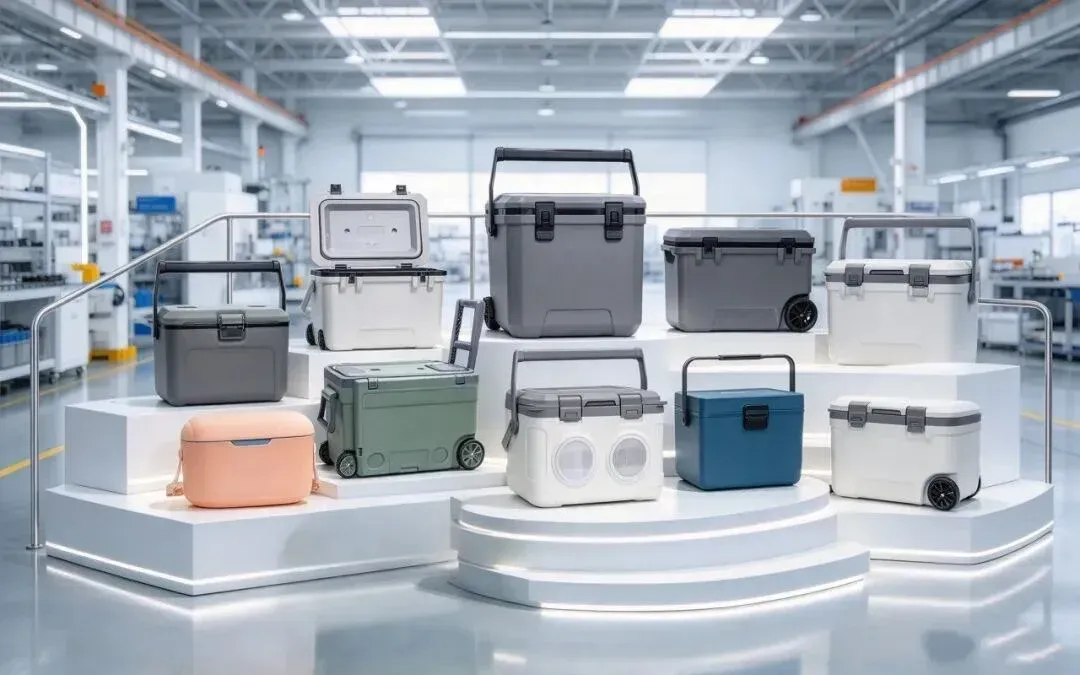
An outdoor cooler must fit the vehicle, carry the intended load and meet its temperature requirements. Yunqing Light weight vacuum insulation panels offer an option for thinner insulation. The useful result, however, depends on the complete wall and lid design, not a panel number alone.
Can a thinner VIP wall make a cooler hold more?
Yes, if the redesigned wall leaves more internal space while meeting the thermal and mechanical requirements. Compare the complete protected wall thickness, then deduct space occupied by coolant, baskets and equipment. A percentage reduction in insulation thickness does not mean the same percentage increase in payload capacity.
Set the cooler design constraint first
| Design objective | Keep fixed | Evaluate |
|---|---|---|
| More capacity in the same footprint | External dimensions, handling clearances and thermal duty. | Net payload space, empty-box mass and measured thermal performance. |
| A smaller box for the same load | Payload dimensions, loading arrangement and thermal duty. | External dimensions, complete wall thickness and transport fit. |
Distinguish a passive cooler with ice or PCM from a powered car refrigerator. A passive-box holding-time test does not establish compressor energy consumption; an active cooling test does not establish power-off holding time.
How to calculate a cooler's usable space from the complete wall
For a rectangular box with the same total wall allowance on all six faces, the clear cavity volume is:
V = (L − 2t) × (W − 2t) × (H − 2t)
L, W and H are outside dimensions; t includes skins, insulation, protection and assembly clearances per face. Use metres for cubic metres, then multiply by 1,000 for litres. If the lid or base differs, calculate each face separately.
Illustrative geometry only: a 500 × 400 × 400 mm envelope with 40 mm per face gives a 420 × 320 × 320 mm cavity, about 43.0 L. At 30 mm per face, the cavity is 440 × 340 × 340 mm, about 50.9 L. That is approximately 18.3% more geometric volume, before fittings or coolant. These assumed wall dimensions are not Yunqing Light weight specifications and do not show that the two boxes insulate equally.
Net payload capacity is smaller where ice packs, baskets, drains, compressor compartments or evaporators occupy space. Check the intended items and loading path in CAD and in a physical sample; nominal litres alone do not establish payload fit.
How should Yunqing Light weight VIP fit into the wall?
A VIP is a sealed insulation component, not the outer shell or structural liner. EPP or another specified foam can still support and protect the panel. Design the materials together rather than treating them as mutually exclusive choices.
Protect the envelope
Provide smooth support and protection from sharp edges, inserts, screws and abrasion. Do not cut, drill or puncture the finished panel; specify its geometry before manufacture.
Resolve corners and seams
Allow for sealing margins, panel joints and manufacturing tolerances. Check heat paths at corners instead of assuming the whole wall performs like a panel centre.
Include the lid and fittings
Review gasket contact, latch compression, hinge zones and lid insulation. Keep drains, handles, wheels and refrigeration-component fixings out of sealed panels. Count protective layers in the thickness and mass budget.
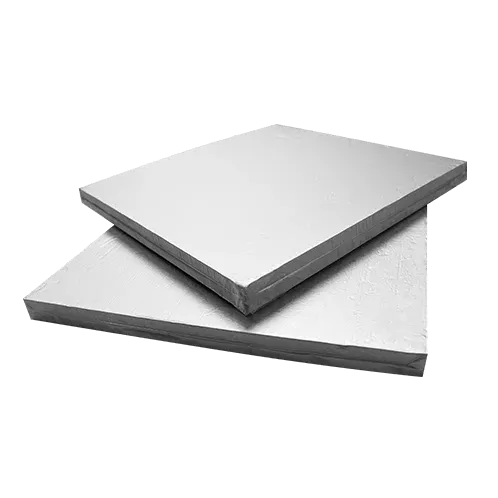
Which Yunqing Light weight specifications belong in the brief?
These entries come directly from the current Yunqing Light weight product specification on this site. Confirm finished mass, tolerances, temperature conditions and the conductivity test basis for the selected production drawing.
| Property | Published specification |
|---|---|
| Thermal conductivity λ | ≤ 6.0 mW/(m·K) = ≤ 0.0060 W/(m·K) |
| Length and width | 100–1000 mm |
| Thickness | 5–50 mm |
Core density is not finished-panel density or finished-box weight. Use measured or agreed panel mass at the selected size and thickness; the product page keeps comparison examples and report configurations separate.
View Yunqing Light weight specifications and product photographs. Request the Yunqing Light weight PDF data sheet.
What should a prototype comparison measure?
Build a baseline box and a VIP prototype against the same brief. Document any changes in capacity, coolant quantity or equipment layout so an apparent improvement is not attributed to insulation alone.
Capacity and handling
Measure clear cavity, actual payload fit, empty and loaded mass. Check the opening, carry arrangement and vehicle installation space.
Passive cooling
Fix ambient profile, initial payload temperature and quantity, coolant type and conditioning, pack-out, lid openings and acceptance limits. Measure at agreed positions, not only a convenient centre point.
Powered refrigeration
Compare energy use at the same ambient conditions, setpoint, payload, supply voltage and operating schedule. Test power-off retention separately.
Durability
Apply relevant handling, vibration, impact, cleaning and temperature cycles. Repeat the agreed thermal checks afterwards to assess the integrated construction.
ISO 8301 describes heat-flow-meter measurement of steady-state heat transfer through flat insulation specimens. It does not rate a complete cooler or prescribe holding time. Confirm the method and conditions supporting the panel conductivity, then test the finished product separately. ISO 8301:1991.
Frequently asked questions
Will Yunqing Light weight VIP increase every cooler’s capacity by 30%?
No fixed percentage follows from the panel choice. Outside dimensions, the full wall and lid construction, and space for coolant and equipment determine the result. Calculate the geometry and verify net payload capacity in the prototype.
Does a thinner VIP eliminate the need for foam?
Not necessarily. Foam can remain part of the supporting, protective or gap-filling construction. Define and test the complete wall build-up.
Can a passive cooler actively refrigerate warm contents?
Insulation slows heat transfer; it does not generate cooling. A passive system needs an appropriate cold source, such as conditioned ice or PCM, and a defined starting temperature. A powered refrigerator uses a separate refrigeration system.
What to send for a VIP cooler prototype: wall drawing and test brief
Send outside or payload dimensions, available wall and lid thickness, temperature limits, intended use, mass target, annual quantity and a mounting sketch. We can discuss the Yunqing Light weight layout or a complete insulated-box option.
Discuss a Yunqing Light weight panel configuration. Explore insulated cooler and shipping-box options.