
VIP Barrier Films Compared: Why Aged Conductivity Decides Service Life
Key facts: VIP barrier films and ageing
- A VIP's initial conductivity is set mainly by its core. How long it stays low is set mainly by the barrier envelope: the film, the seals and the getter behind them.
- Judge a panel by its aged conductivity and thermal-resistance retention, not only by its factory value.
- In Super Tech's 70 °C / 90% RH, 28-day comparison, panels with nanocomposite film kept about 72% of their thermal resistance, EVOH film about 66% and conventional aluminized PET less than 55%.
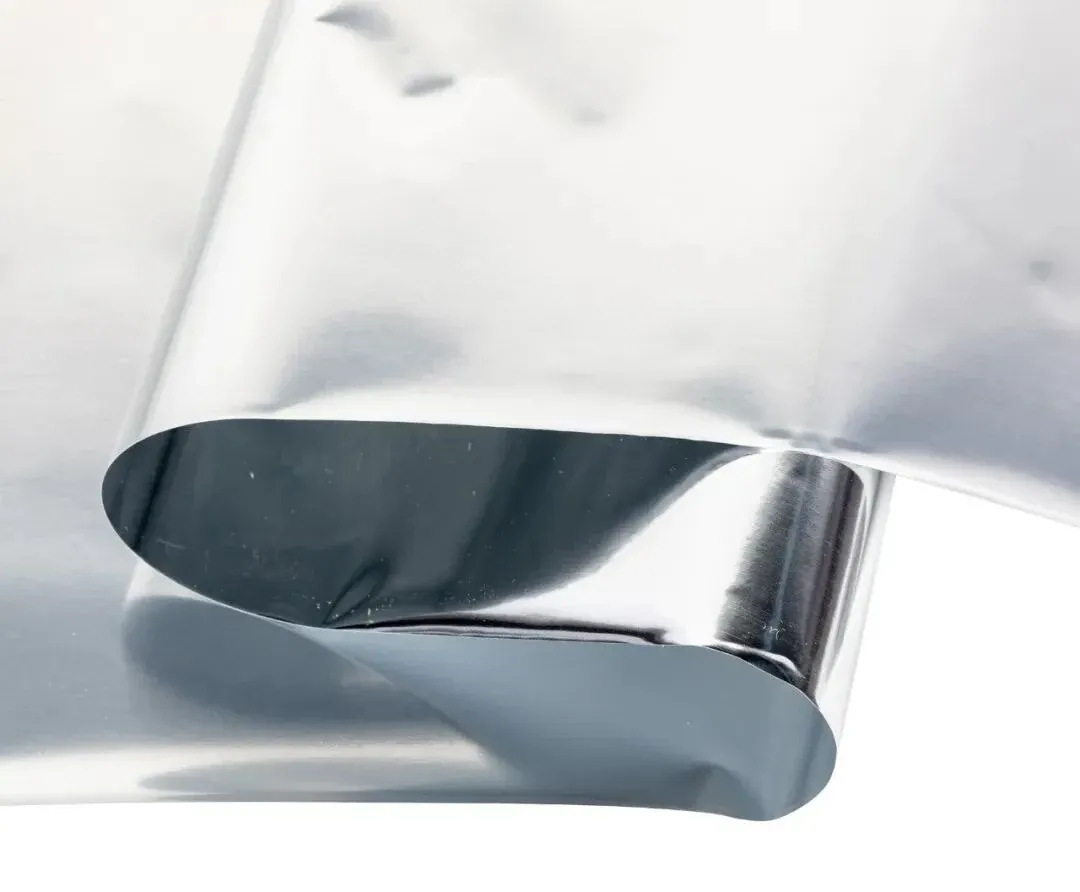
- Nanocomposite films block moisture and gas with a long, winding path through inorganic platelets instead of a continuous aluminium layer: fewer pinholes, and less metal to carry heat around the edge.
- Ask suppliers for aged values under stated conditions, the calculation behind any retention figure, and how short tests are translated into years of service.
Why initial thermal conductivity is not enough to judge a VIP
Vacuum insulation panels are chosen for refrigerators, freezers, cold-chain packaging and buildings because their initial thermal conductivity is far below that of foam. That number is measured when the panel is new. A refrigerator, however, runs for ten to fifteen years. If its panels let in noticeable moisture during the first three to five years, conductivity climbs, the compressor runs longer and the appliance's lifetime energy use rises with it.
The useful question is therefore not how good a panel looks on the day it ships, but how much of that performance it keeps. This is why VIP qualification is moving from measuring initial values to measuring service life:
- Temperature cycling exposes mismatched thermal expansion between film layers, seal fatigue and micro-cracks in coatings.
- Damp-heat ageing accelerates water-vapour permeation, adhesive hydrolysis and delamination at layer interfaces.
- Accelerated-ageing models use short test periods to estimate years of accumulated exposure and back-calculate service life at normal temperatures.
How those results are tied to a specific application, and what evidence a buyer should expect, is covered in our guide to verifying VIP service-life claims.
How the barrier film controls VIP service life
A VIP insulates because its evacuated core leaves almost no gas to conduct or convect heat. Water vapour, oxygen and nitrogen from the surrounding air permeate the envelope slowly but continuously. As they accumulate, the internal pressure rises and so does the panel's thermal conductivity, until the panel loses its exceptional insulating value.
Put simply: the core sets where a VIP starts; the envelope decides how it ages. The film is not the only part of that envelope. Seal quality limits ingress along the edges, and a getter and desiccant absorb part of the gas that does get in (see getter and desiccant selection). But the film area is by far the largest surface through which gas can enter, which makes the choice of film the single biggest lever on long-term performance.
Aluminized PET, EVOH and nanocomposite barrier films compared
Three film families dominate VIP production today. Super Tech compared panels made with each after damp-heat ageing:
| Film family | Initial λ, W/(m·K) | Aged λ, W/(m·K) | Thermal-resistance retention |
|---|---|---|---|
| Conventional aluminized PET laminate | ≈ 0.0045 | > 0.0085 | < 55% |
| EVOH laminate | ≈ 0.0021 | ≈ 0.0032 | ≈ 66% |
| Nanocomposite barrier film | ≈ 0.0020 | ≈ 0.0028 | ≈ 72% |
Conventional aluminized PET is the low-cost option. Its vapour-deposited aluminium layer is not perfectly continuous; pinholes and micro-cracks give water vapour a direct route in. In Super Tech's assessment, panels with this film can show noticeable moisture ingress within three to five years of refrigerator service.
EVOH laminates have long been the reference for premium appliances. Dry EVOH is an outstanding oxygen barrier, but the polymer carries many hydroxyl groups and absorbs water; at high humidity its oxygen barrier can fall by an order of magnitude or more. These laminates also tend to contain more aluminium, which conducts heat around the panel edge.
Nanocomposite films combine a high barrier with a low edge thermal bridge and stable behaviour in both temperature cycling and damp heat, which is why they are regarded as the next generation of VIP envelopes.
How thermal-resistance retention is calculated
Thermal resistance is thickness divided by conductivity, R = d ÷ λ. When the panel's thickness does not change during ageing, the share of resistance it keeps is simply:
Retention = λinitial ÷ λaged
With the rounded table values this gives 0.0020 ÷ 0.0028 ≈ 71% for the nanocomposite film, 0.0021 ÷ 0.0032 ≈ 66% for EVOH and 0.0045 ÷ 0.0085 ≈ 53% for aluminized PET, consistent with the published retention figures. Compare retention alongside the absolute values: a panel that starts low and keeps a high share of its resistance is the one that keeps saving energy. The basics of the R-value and thickness calculation are in our insulation thickness explainer.
Why nanocomposite barrier films last longer
The nanocomposite barrier film developed by Super Tech's film subsidiary does not rely on a continuous metal layer. Instead, a nano-scale coating on a PET base builds a structure of inorganic platelets embedded in polymer, similar to the brick-and-mortar layers of nacre. Water vapour and gas molecules cannot pass straight through; they must wind their way between the platelets. The longer path sharply reduces the rate at which they diffuse.
Because the coating is continuous, it has far fewer pinholes than a conventional vapour-deposited aluminium layer, and it is less prone to cracking or pinhole growth when temperature and humidity change. Its aluminium content is also much lower than that of EVOH-aluminium laminates, which weakens the thermal bridge where the film wraps around the panel edge. For a refrigerator, that means less local heat loss and more predictable energy use over time. Why the edge matters, and how it differs from gas leakage, is explained in VIP edge leakage vs. thermal bridges.
Why the barrier film is a life-defining VIP component
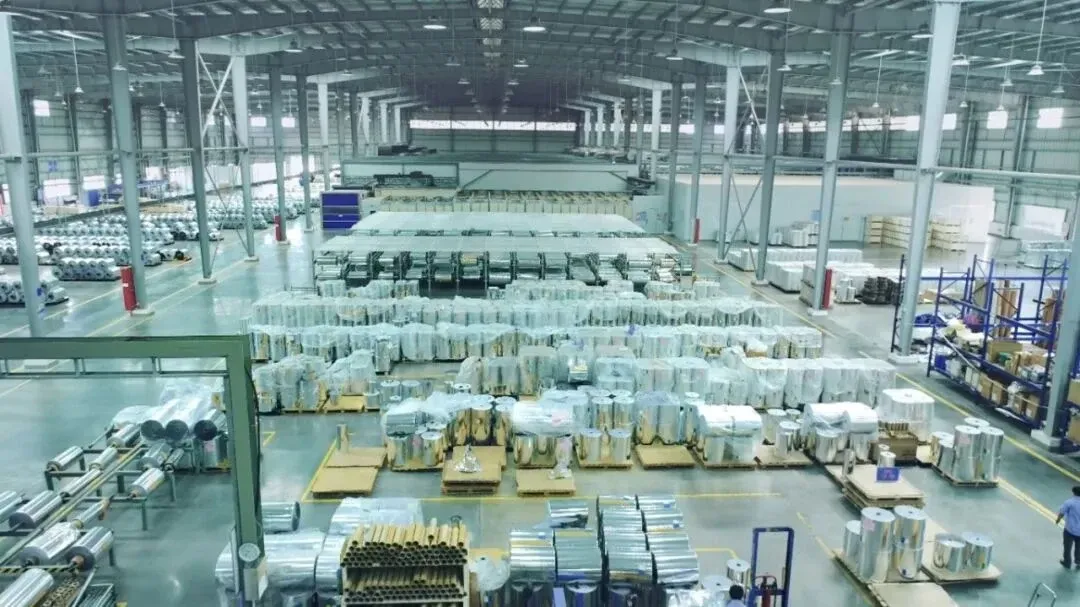
For appliances held to lifetime energy targets, the barrier film should be managed as a life-defining component, not as packaging. A new refrigerator that saves energy is the starting point; one that keeps saving energy for ten to fifteen years is the goal. Long service life is not a warranty slogan. It results from the film's barrier performance, its resistance to damp heat, a low-bridge edge design and an ageing-verification routine working together.
Barrier-film configurations in Supertech fiberglass VIPs
Our fiberglass VIP range is offered in three barrier-film configurations: Double Alu, Hybrid and Nano. The published film-level data show the difference between the two higher-barrier films:
| Indicator | Hybrid VIP | Nano VIP |
|---|---|---|
| Water-vapour transmission, 38 °C / 90% RH | < 0.02 g/(m²·24 h) | < 0.005 g/(m²·24 h) |
| Helium permeability, Pa·L/(s·cm²) | < 5 × 10⁻⁷ | < 5 × 10⁻⁸ |
| Initial panel λ | 1.8 ± 0.4 mW/(m·K) | 1.8 ± 0.4 mW/(m·K) |
Full configuration data are on the fiberglass VIP page, and the current datasheet can be requested from our technical resources.
What to ask a VIP supplier about barrier films and ageing
- Aged values, not only initial ones. Initial and aged conductivity of the finished panel, with the exposure stated (temperature, humidity, duration, cycling).
- The retention calculation. Which values the retention percentage is based on, and whether thickness changed.
- Film-level data with conditions. Water-vapour and gas transmission of the envelope film, with the test conditions.
- The lifetime model. How short tests are translated into years for your service climate, and the acceptance limit at end of life.
- Edge design. Film construction at the seams and its effect on the edge thermal bridge for your panel size.
Frequently asked questions
Why does the barrier film matter so much for VIP service life?
A vacuum insulation panel insulates because almost no gas is left inside it. Water vapour, oxygen and nitrogen slowly permeate the envelope, raise the internal pressure and push the thermal conductivity up. The core largely sets the starting conductivity; the barrier film, together with the edge seals and the getter, largely sets how quickly that value drifts during service.
What is thermal-resistance retention and how is it calculated?
It is the share of the original thermal resistance a panel still has after ageing. At unchanged thickness it equals the initial conductivity divided by the aged conductivity. For example, a panel that rises from 0.0020 to 0.0028 W/(m·K) keeps 0.0020 ÷ 0.0028 ≈ 71% of its thermal resistance.
Is EVOH a poor barrier film for vacuum insulation panels?
No. EVOH laminates are an established high-barrier solution for premium appliances and block oxygen very well when dry. EVOH is hydrophilic, however, and its oxygen barrier can fall by an order of magnitude or more at high humidity. Laminates with a high aluminium content also conduct more heat around the panel edge. Both points matter most for humid, long-life applications.
Does a 28-day damp-heat test prove a 10–15-year service life?
No. A 70 °C / 90% RH exposure is an accelerated screen that separates good and weak envelopes quickly. Translating it into years of service needs temperature cycling, damp-heat ageing and a lifetime model tied to the real service climate and an agreed acceptance limit.
References
- Super Tech Advanced Material — “Low thermal conductivity is only the starting point: barrier-film performance decides the VIP service-life curve”, company article, 26 October 2026 (source of the film-family comparison).
- ASTM F1249 — Water vapor transmission rate through plastic film and sheeting using a modulated infrared sensor.
- ASTM D3985 — Oxygen gas transmission rate through plastic film and sheeting using a coulometric sensor.
- ASTM C1667 — Heat flow meter measurement of the center-of-panel thermal transmission properties of vacuum insulation panels.
- EN 17140 — Thermal insulation products for buildings. Factory-made vacuum insulation panels (VIP). Specification.
Related: Fiberglass VIP: Double Alu, Hybrid and Nano · Verifying VIP service life · Getter and desiccant selection · Discuss your panel requirements