
What Is a Metal Vacuum Insulation Panel (M-VIP)?
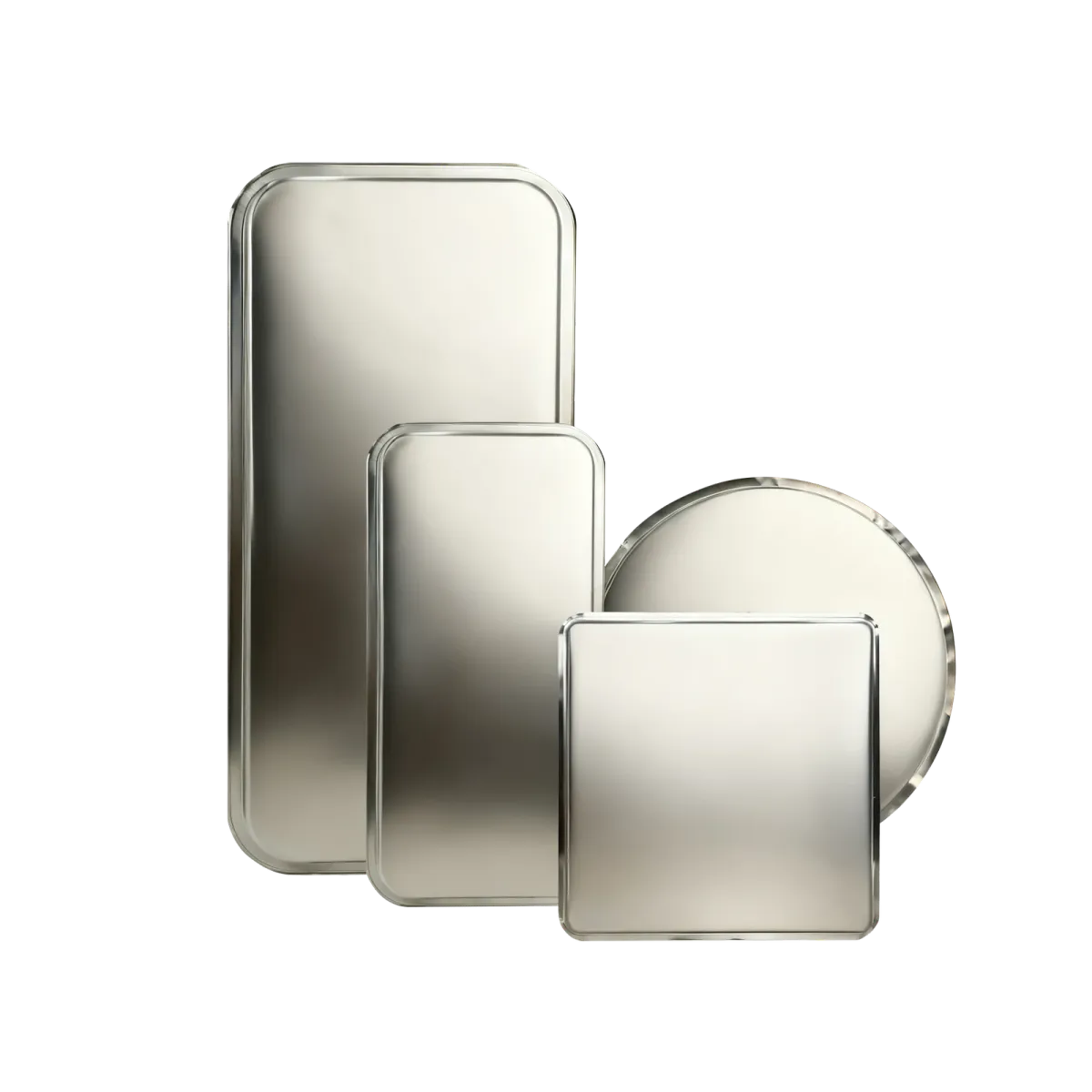
A metal vacuum insulation panel combines an evacuated porous core with a sealed metal envelope. Its value comes from the complete construction, not from the metal skin alone.
Think of the vacuum principle used in a thermos, adapted to a panel that must also withstand atmospheric pressure, fit a defined space and integrate into a larger assembly. This guide uses welded stainless-steel M-VIP as a concrete example and explains what to check before specifying it.
M-VIP in brief
- Reduced internal gas pressure limits gas conduction; the porous core supports the envelope.
- Metal-envelope VIP and a metallized barrier-film VIP are not the same construction.
- Edges, joints and mounting details contribute to heat flow beyond the panel centre.
- Specify the size and openings before manufacture. Do not cut, drill or puncture a finished panel.
What is inside an M-VIP?
Porous core
The core supports the two faces against the pressure difference and provides a low-conduction path through the panel. Its pore structure, material and density influence thermal performance. The core is not an empty vacuum cavity.
Metal envelope and sealed perimeter
In the stainless-steel configuration discussed here, a welded metal envelope encloses the evacuated core. Shell material, thickness, seams and edge geometry are part of the specification. A metal surface does not, by itself, establish seal quality or thermal performance.
Vacuum
Lower gas pressure reduces heat transfer by the gas within the pores. It does not eliminate heat conduction through the solid core or envelope, nor thermal radiation. Conductivity therefore depends on core structure, pressure and temperature rather than on a vacuum label alone.
Gas-control materials, where specified
Getters and desiccants can address selected gases and moisture inside a panel. Their type and capacity must match the configuration; they cannot repair a puncture or replace a sound seal. Confirm the actual gas-control system rather than assuming every M-VIP has the same formulation.
The IEA EBC Annex 39 report explains these heat-transfer mechanisms and envelope trade-offs. It is a technical background reference, not a current Supertech product specification. IEA EBC Annex 39.
Metal envelope vs. barrier film VIP: how the construction differs
A flexible barrier film may contain aluminium foil or metallized layers without becoming a welded metal-shell panel. Ask for the actual envelope construction: the names “metal VIP” or “VAP” alone do not establish the core, seal or operating limits.
| Design question | Barrier-film VIP | Welded metal-envelope M-VIP |
|---|---|---|
| Envelope and closure | Multilayer barrier film with a sealed perimeter; review the film and seam specification. | Metal envelope with welded seams in this configuration; review weld integrity and edge geometry. |
| Handling and weight | Needs protection from sharp objects, abrasion and concentrated loads; compare finished panel mass. | A metal skin changes mechanical behaviour but is not puncture-proof or a load-bearing approval; compare finished mass and support. |
| Temperature and ageing | Assess the selected film, core, seals and gas-control system under the intended conditions. | Assess the selected alloy, core, welds and gas-control system; a metal shell does not establish unlimited life or a universal temperature rating. |
| Heat flow and cost | Include film edges, joints, cover layers and the project quotation. | Include conductive metal edges, joints, mounts and the project quotation. Do not infer an assembly advantage from the centre value alone. |
Stainless-steel M-VIP specifications by configuration
The following values come from the published stainless-steel M-VIP configuration on our product page. They do not apply automatically to aluminium-shell VAP or every ST-coded product.
| Property | Published stainless-steel M-VIP value |
|---|---|
| Thermal conductivity at 25°C | ≤ 2.0 mW/(m·K) |
| Thickness | 2–40 mm |
| Minimum / maximum panel size | 100 × 100 / 500 × 1000 mm |
| Edge-sealing width | 5–15 mm |
The conductivity value is specified at 25°C. Confirm the measurement method and whether it represents centre or effective performance before using it in a design. It is not a constant to apply across the entire operating-temperature range, nor a whole-wall or equipment heat-loss result.
View the complete VAP / metal VIP selection page. Request the stainless-steel M-VIP PDF data sheet.
Why a metal VIP insulates, and why its edge still conducts heat
Heat flowing through the evacuated core follows a different path from heat conducted around the metal perimeter. The panel can provide low through-thickness conductivity while its envelope creates an additional edge path. Smaller pieces, more joints or metal fasteners can change the performance of the finished layout.
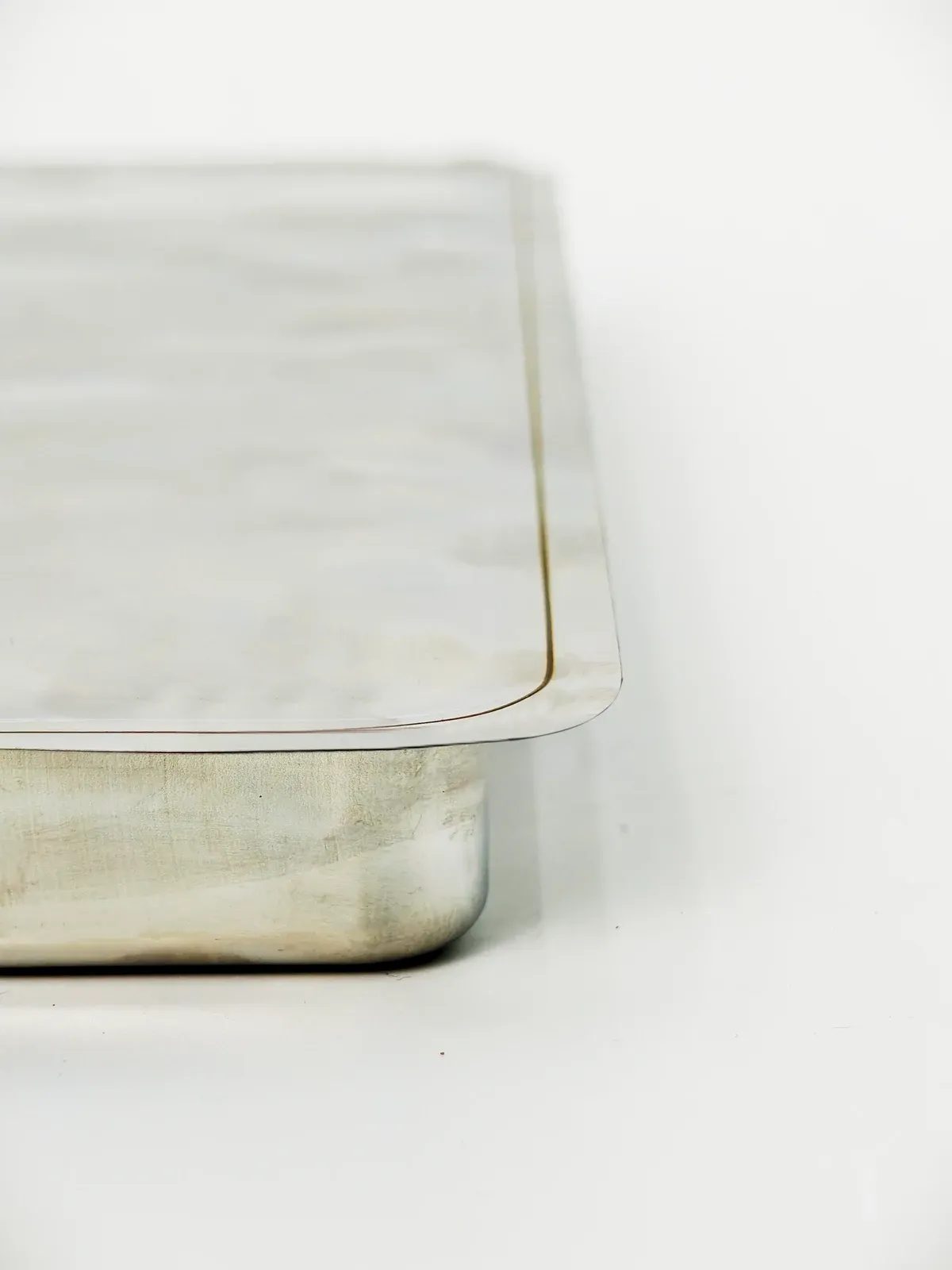
Compare panels at the intended dimensions and thickness, then evaluate the complete assembly with its gaps, supports and penetrations. In building applications, ISO 10211 provides a method for detailed thermal-bridge calculations; it is not a product certification. ISO 10211:2017.
Separate edge thermal bridges from vacuum leakage.
Why the M-VIP layout must be designed before ordering
The rectangular and circular examples show that geometry is a specification decision. Reserve service penetrations, fastener zones and clearances in the drawing. Confirm available shapes, tolerances, sealing margins and mounting arrangements with the supplier rather than trimming panels during installation.
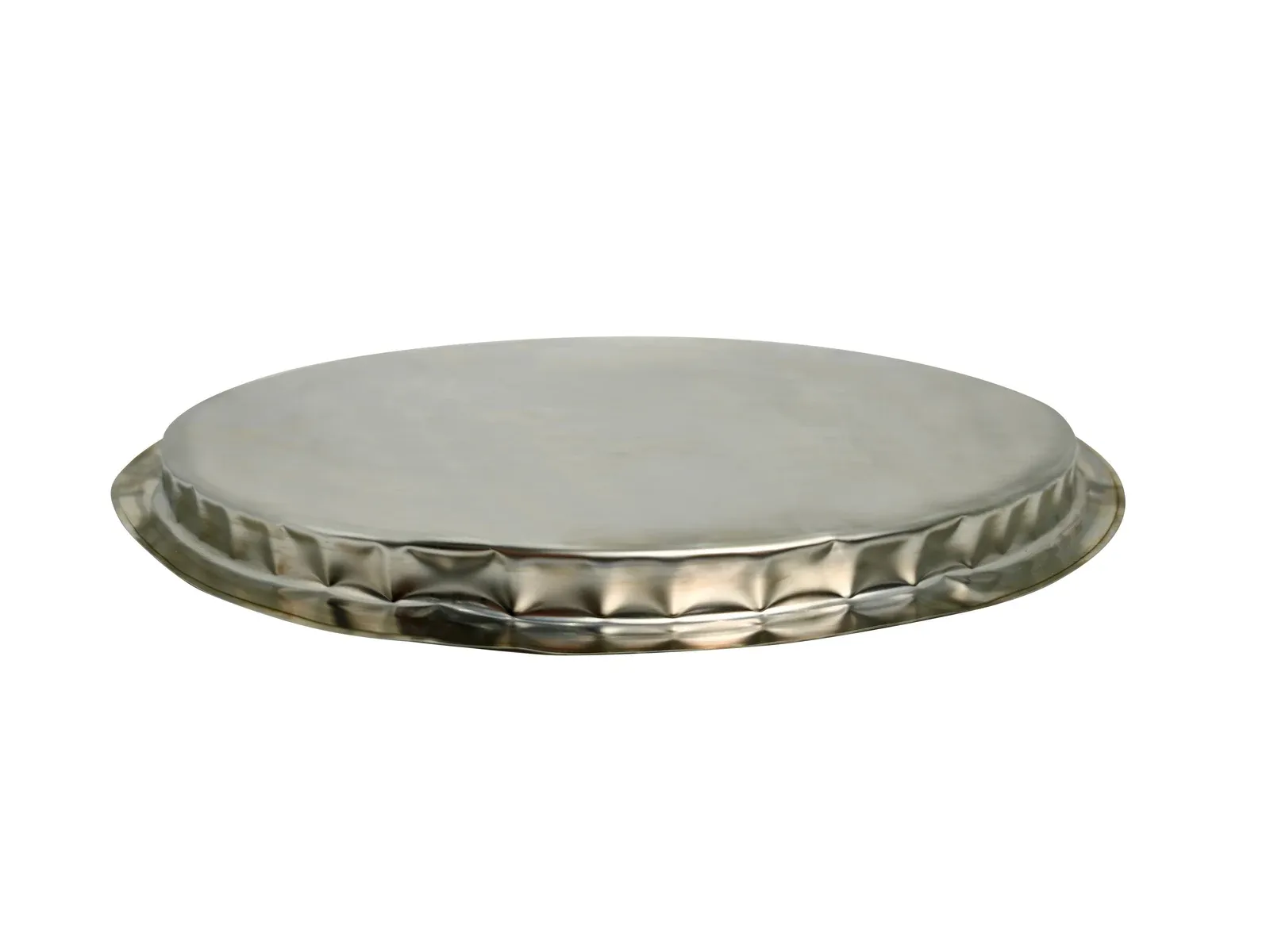
- Protect the envelope during storage, handling and integration, including contact with sharp edges.
- Use the agreed support and attachment method; keep screws and other penetrations out of the sealed envelope.
- Define an incoming inspection and thermal acceptance method. Appearance alone cannot verify vacuum condition.
- If a panel is punctured, surface tape does not restore its vacuum. Isolate the affected panel and arrange assessment or replacement.
Which evidence an M-VIP application needs
An M-VIP name does not establish fire classification, building approval, cleanroom suitability or battery safety. Use evidence for the selected product and its intended assembly. ISO 16478 addresses VIP products within its building-insulation scope, but does not prescribe the installation or cover industrial equipment insulation. ISO 16478:2023.
- Documented stainless-steel VIP internal-wall application
- Metal VIP in container-home wall design
- High-temperature equipment qualification
- Gas-control materials and finished-panel validation
- How to verify a panel service-life claim
Frequently asked questions
Is an M-VIP a completely empty, perfect-vacuum panel?
No. It contains a porous core and operates at reduced gas pressure. The core supports the envelope, while solid conduction, residual gas conduction and radiation still contribute to heat transfer.
Does an aluminium-containing barrier film count as a welded metal envelope?
Not automatically. A polymer laminate can include metal foil or metallized layers and use a different sealing method. Identify the actual envelope and seam construction rather than relying on the visible surface or product-family name.
Does a metal shell guarantee a 50-year service life?
No. A lifetime claim needs an acceptance limit, service conditions and relevant finished-panel ageing evidence. Shell material alone does not establish a guaranteed duration.
Can M-VIP be cut or drilled after delivery?
Do not cut, drill or puncture the sealed panel. Breaking the envelope can admit gas and degrade insulation. Specify dimensions, openings and mounting clearances before manufacture.
What to send in an M-VIP project brief
To compare a metal-envelope option with a barrier-film VIP, send the same requirements for both:
- Hot- and cold-side temperatures, ambient conditions and continuous or cyclic duty.
- Available thickness, panel dimensions, geometry, joints and a sketch of the mounting arrangement.
- Required heat-loss or cold-side-temperature limit, test conditions and acceptance criteria.
- Handling, mass, quantity and documentation requirements, including any application-specific qualification.
Discuss a VAP / metal VIP configuration.